It is one of the few Italian red wines that has managed to build a consolidated image of luxury and prestige. Amarone della Valpolicella has become synonymous with a special wine, with an extreme style, capable of overwhelming and pampering the palate at the same time: extractive power, warmth, softness and concentration, in the best cases combined with a great sense of proportion. It has found its definitive consecration mainly abroad, becoming the emblem of the “meditation” red, easy to drink even without food. But even in Italy it continues to have a certain appeal, if only as a bottle for special occasions.
Today, however, it is impossible to deny that Amarone is going through a turbulent phase. The figures show a modest decline rather than a collapse: –2.4% in 2025 according to the Valpolicella consortium. But there is real concern about the long-term viability of the appellation. Taste preferences have changed course: lightness has become a mantra, especially among professionals.
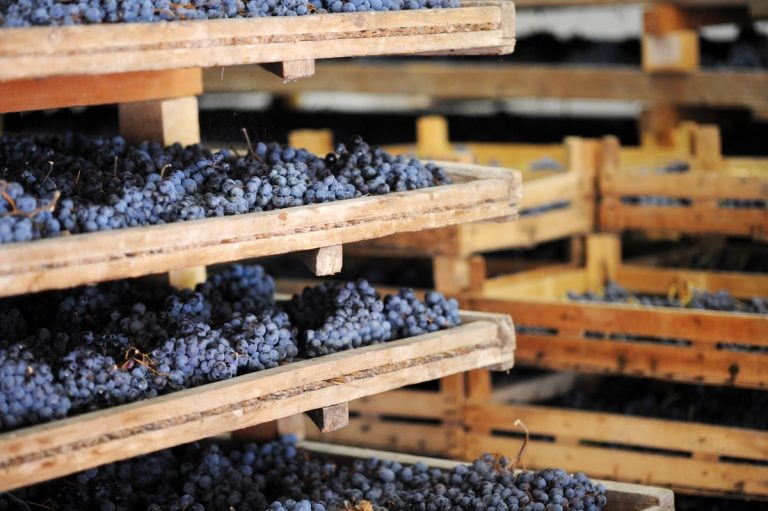
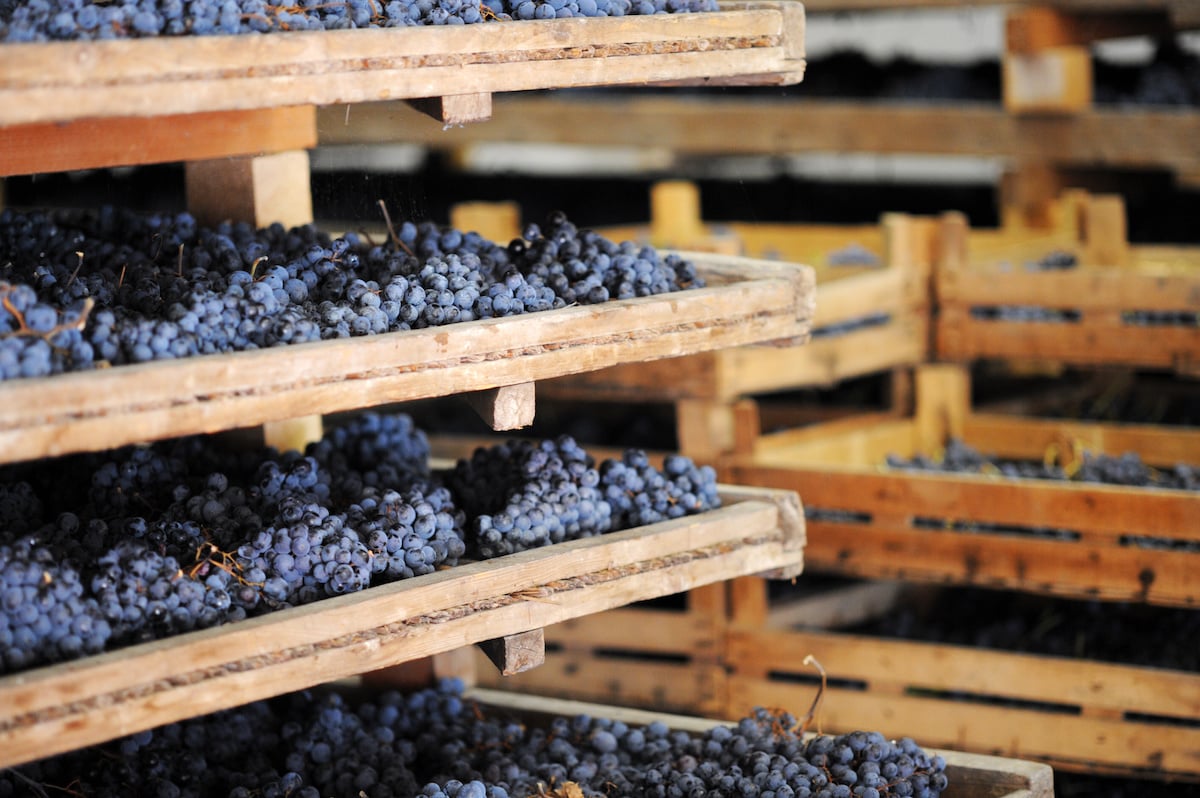
The drying process, from which it originates, results in a high concentration of sugars, making it almost impossible to have less than 16 degrees of alcohol (with peaks of 17.5). Furthermore, it goes against the trend of preferring wines that are a direct expression of the terroir, without filters or superstructures. The risk, according to many, is that it is precisely this method that “makes” the wine, crushing the differences in soil, exposure and microclimate.
«The Amarone production method is a unique framework, convenient in some ways, but also double-edged», said JC Viens, ambassador of the Valpolicella Consortium, at the inauguration of Amarone Opera Prima 2026. «The risk is to focus entirely on that, when instead we should be looking above all at the terroir».
Yet, paradoxically, drying was created precisely to amplify the territory. The traditional grapes of Valpolicella – mainly Corvina, Corvinone, Rondinella and Molinara – are by their nature low in colour and light. When vinified immediately after harvest, they produce graceful, enjoyable but fairly simple wines. «These varieties withstand drying better than others», explains Maria Sabrina Tedeschi, president of the Famiglie Storiche dell'Amarone (Historic Families), «because they express sensations that they would not be able to develop without this step».
The solution, then, is not to reject the formula, but to reinterpret it. Even on a semantic level: «In the past, we talked about resting the grapes, not drying them», suggests Viens. «It was a different idea, more cultural than technical». This also gives rise to the next symbolic challenge: obtaining UNESCO heritage status for the technique of "resting the grapes". The application will be officially submitted in March.
Revolution in the glass
Tastings of Amarone Opera Prima 2026 and a meeting elsewhere with the Famiglie Storiche paint a picture of change: Amarone is undergoing a rapid revolution. Massive wines, marked by significant sugar residues, invasive wood and premature oxidation, are becoming increasingly rare. The trend is towards subtlety, but this is not without risks.
«The danger is making weak wines», warns Marco Speri of Secondo Marco, who has always been an advocate of a more sober and elegant style. In fact, in some cases, the desire for smoothness leads to thin wines, with profiles reminiscent of simple Valpolicella and an alcohol content that, not supported by adequate substance, leaves a dryness. In others, a vegetal and unresolved character emerges.
The best, however, demonstrate that removing does not mean stripping away. Rather than a new style, it is a return to a more classic concept, which has always been preferred by a few traditionalists who are now a much greater source of inspiration than the “modernist” meteors of the 1990s.
«Amarone in the 1970s and 1980s was like this: a complex wine, but not overly structured. And ours has always remained so», says Giampaolo Speri, owner of the winery of the same name. The recent changes made by the Consortium are a step in the right direction: for some years now, it has been possible to shorten the period in the fruit cellar, with vinification already taking place in mid-November. However, the most important producers prefer to intervene earlier, working mainly in the vineyard.
«The problem is doing everything in the same vineyard: Superiore, Ripasso and Amarone», adds Giampaolo Speri, who has always produced Amarone from a single high-altitude cru, Vigna Sant'Urbano. There is certainly a growing focus on parcelling, exposure and altitude. The race to the top is now inevitable, with new vineyards above 500 metres, especially in Valpolicella Classica, or in cooler areas such as Valpantena. «A narrow, wooded valley, where the cold wind from the Lessini mountains is channelled», says Chiara Mattiello, communications manager at Costa Arente, one of the emerging wineries representing the 2.0 style.
Another significant comeback is that of the Veronese pergola, partially supplanted by the espalier: «If oriented north-south, it is the only system that guarantees radiation without sunburn, which leads to rot», says Marco Speri of Secondo Marco. «And for a wine made from dried grapes, rot is simply unacceptable».
The 2021 vintage as a watershed moment
2021 is considered a balanced vintage, described by many as the last “classic”. In fact, the wines reveal sharp edges and acidic tensions that are not often seen, a sign that they are still in a transitional phase. It remains to be seen whether this style can be refined and, above all, replicated in warmer vintages, such as 2022, which will be released next year.
In any case, the change will emerge slowly: many 2021 wines are still maturing and some wineries still have wines on the market that are stylistically far removed from this new sensibility. Yet the best tastings show that another Amarone is possible: less powerful, more refined, still linked to the method, but without caricature. A fine wine capable of keeping up with the times without betraying itself. And without becoming a relic for nostalgics!
 Wine is changing its place at the table
 The Rioja you don’t expect: whites that keep pace with the reds
 The soul of Maratea amid crystal clear sea, monuments and breathtaking views
 How Amarone changes its skin
 From the distillery to the global market: the numbers and identity of an Italian brand