The Ormeasco grape, and the wine it produces, fully embodies the authentic identity of the Ligurian hinterland, a land where viticulture, despite often difficult conditions, manages to bring out the territory’s innermost soul.
It originates in northwestern Italy and reaches its fullest expression in Pornassio, a small town in the province of Imperia with fewer than 700 inhabitants, which gives its name to the Denomination of Controlled Origin (DOC) that protects its quality and regulates production.
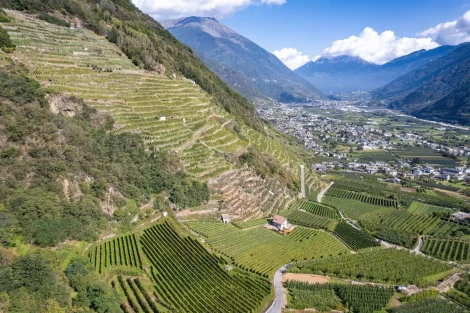
Although its cultivation area is mainly concentrated in the municipality of Pornassio, Ormeasco can also be found in some hamlets of the upper Arroscia Valley, in the inland areas of western Liguria, where other notable wines are produced, such as Vermentino, Pigato, and Rossese di Dolceacqua. The terrain is mountainous, with steep slopes, poor and rocky soils, and altitudes ranging from 400 to 700 meters above sea level. The microclimate is undoubtedly the key factor for grape ripening: the nearby Ligurian Sea ensures healthy growth of the berries, while the orography creates strong temperature swings, particularly during the warmest months when the clusters reach full maturity.
Its relationship with Dolcetto
Ormeasco can be considered a fully native variety, although genetically it is related to Dolcetto. However, climate and terroir shape every grape differently, and this is what makes Ormeasco behave differently from Dolcetto—both agronomically and organoleptically. Its ripening is longer, the tannic profile is finer, and the acidity is more pronounced compared with its Piedmontese cousin, giving it a unique authenticity and character.
Yields are particularly low, both due to the DOC’s production regulations and because this is heroic viticulture, almost entirely performed on terraced vineyards that naturally limit output per hectare.
Wine styles
The DOC primarily covers four styles: the red, the most widespread, medium-bodied, with aromas of red fruit, spices, and floral notes, fresh on the palate and highly drinkable; the Superiore, made from strictly selected grapes and generally aged longer for added complexity while maintaining elegance and finesse; the Ormeasco di Pornassio Sciac-trà; the rosé; and the passito, expressing the grape’s contemplative side in a style rooted in the most archaic traditions.
Producers
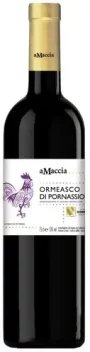
Among the producers of Ormeasco, AMaccia of Ranzo, in the heart of the Arroscia Valley, stands out. The 2024 vintage shows aromas of wild blackberry and dried violet, with a pleasantly fresh, Mediterranean style that never becomes heavy—a wine featured in the Gambero Rosso 2026 BereBene guide. Other notable producers include Fontanacota of Pornassio with the 2022 Superiore, and Viticoltori Ingauni with the Ormeasco Sciac-trà 2024.
In short, the beauty of Italy’s wine world lies precisely in wines like this: not trendy or fashionable labels, but wines that express local identity, authentic stories of agricultural resilience, and a strong commitment to resisting easy homogenisation.
 Introducing the Vinitaly and the City 2026 programme. This year, the fringe event will also take place at the Arena di Verona
 Vinitaly 2026: the future of Italian wine is already being showcased at the trade fair. Here are the highlights of the latest edition
 Gaja unveils 2023 vintage of Camarcanda
 'It’s not about pushing your own agenda and your own taste'
 Certification, sustainability and sparkling wine: Enrico Serafino's story