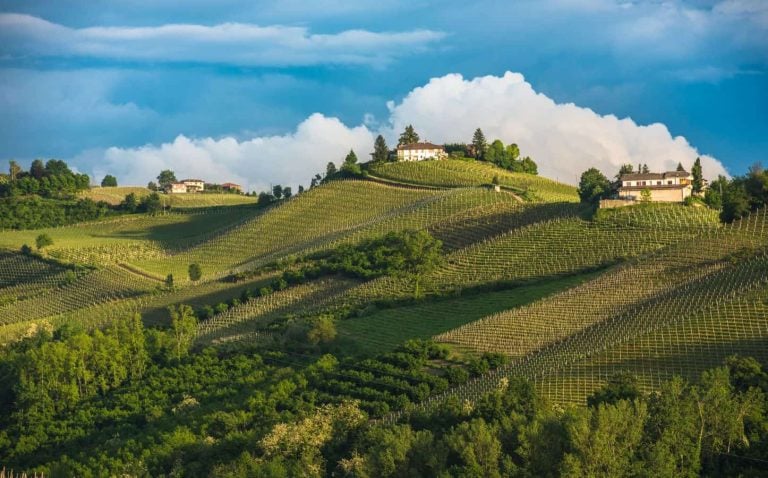
The UNESCO brand attracts and enhances the territories and traditions that can display it. Wine-producing areas know this well: from Pantelleria to the Langhe-Roero and Monferrato, and through to the Prosecco Hills, several territories have obtained the prestigious recognition over the last decade. But this is not without critical issues.
What should we expect now that Italy, with its cuisine and its food and wine tradition, has been included in UNESCO’s prestigious list by the Committee for Intangible Cultural Heritage? The entire Made in Italy agri-food sector, and in particular wine – which is a decisive component, and currently facing market difficulties – is counting on the strong push provided by this new international status. This status will act as an umbrella for countless territorial expressions, as a sort of cultural and collective label that begins with farming families and extends all the way to the restaurant industry (which, according to ISMEA, reached €250 billion worldwide in 2024).
How to protect UNESCO heritage
There are effects on the wine territories that have received UNESCO recognition. These begin with increased tourist presence and with some shifts in the local economy at an employment level. This was confirmed by the interdisciplinary study Economic Impact of UNESCO Recognition, launched in 2023 by UnitelmaSapienza University in Rome, headed by Pier Luigi Petrillo, professor of cultural and food traditions at Luiss Guido Carli. Preliminary data shows that places and agro-food traditions with UNESCO recognition are more attractive and more productive than those without it.
But it is also true that several critical aspects remain. Having a heritage (whether material or intangible) implies, by definition, the possibility of losing it or squandering it. There are risks: the first concerns identity itself which, paradoxically, with the spotlight shining on it, risks being lost in favour of commercial logic driven by easy profits. Not by chance, we should recall the critique published some months ago by The New York Times, which described Italy as a giant food playground of spritz and carbonara.
Parallel to this is the well-known phenomenon of overtourism. But there is more. The increase in the cost of living linked to tourism makes it difficult for local residents to remain in zones that gradually fill with bed & breakfasts and lose inhabitants. Looking to the future, another issue is the inadequate training of personnel who, faced with growth in food-and-wine tourism, are often not prepared to communicate these values effectively. Finally, there remains the long-standing problem of imitations and so-called “Italian sounding” (in food and wine), which generates a turnover exceeding €100 billion per year.
We discussed these issues with Bruno Bertero, director of the Langhe-Roero and Monferrato Tourism Authority – which last year celebrated the ten-year anniversary of UNESCO recognition – and with Diego Tomasi, director of the consorzio for Conegliano Valdobbiadene Prosecco Superiore, whose landscape received UNESCO status in 2019.
The tourism gap between UNESCO and non-UNESCO sites
First, we must consider the numbers and the added value that UNESCO status can bring. Between 2023 and 2024, tourist arrivals in cultural sites not recognised by UNESCO generally fell by 3.26%, compared with a 7.39% increase in UNESCO sites; overnight stays rose 2.5% on average in sites without recognition, versus +14.8% in UNESCO sites.
Looking specifically at the post-Covid period, arrivals in UNESCO sites increased by 53.59% in 2021 compared with 2020, and by 67.83% in 2022. In non-UNESCO sites of comparable cultural value, the increase was 41.24% in the first year and 50.65% in the second. The gap in favour of UNESCO sites, according to the research (which established sample models in Italy and in seven other countries), is more than 17 points. The same applies to overnight stays, with a 24-point advantage for UNESCO sites in the first post-Covid year and 17 points in the second.
Growth of businesses in the Prosecco Hills
At the regional level, in the Prosecco Hills of Conegliano and Valdobbiadene, the recognition fostered an increase in tourist accommodation facilities (+11% in the first year, +28% in the second) and beds (+9% in the first year, +20% in the second). After six years, accommodation has grown 45.4% and beds 35.4%. Comparable high-value European wine landscapes without UNESCO recognition saw an increase of only 3% in tourist structures and 8.2% in beds over the same period.
Producers of Prosecco Superiore DOCG also benefited: companies increased by 16% in the first year after recognition and workers by 11.4%. Over six years, companies rose by 17.8% and employment by 21.7%. Over the same period, workforce numbers in tourism and related services increased by 12.4%.
Pantelleria: more agritourism and extended seasonality
UNESCO’s approval of the agricultural practice of Pantelleria’s alberello vine training (2014) did not bring benefits in the years immediately following recognition (+0.3% overnight stays on the island). A shift occurred from 2022, the year of the creation of the Pantelleria National Park and significant communication campaigns that linked Pantelleria to its UNESCO recognition. Each year, overnight stays increased by 9.7%, with strong seasonality extension (+75%) into October, November, March and April.
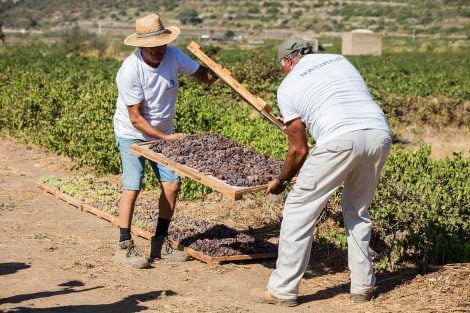
Pantelleria – harvesting the Zibbibo – photo from Donnafugata
Two-thirds of tourists, according to the report, chose the island for reasons linked to UNESCO. There was also strong growth in agritourisms: +24.7% per year between 2014 and 2025, for a total increase of 500% in ten years. Comparable sites with traditional agricultural practices but without UNESCO status saw only a 2% increase (with peaks of 3.2%) in the same time frame.
Light and shade in the Langhe-Roero and Monferrato
With over a decade of experience since recognition, the wine landscapes of Langhe, Roero and Monferrato—already tourism powerhouses—offer a combination of international-level food-and-wine structures and initiatives, registering more than 690,000 arrivals and 1.5 million overnight stays in 2024 alone.
A study by Professor Guido Guerzoni (Bocconi University and CEO of Formules) for the Association for the UNESCO Wine Landscapes revealed undeniable increases in national and international visibility, bringing benefits to tourism and the local economy.
However, growth has been uneven. Between 2012 and 2023, the Nizza Monferrato and Barbera area grew the most (+237% arrivals, +325% overnight stays), although in absolute terms, the Barolo area still attracts the largest number of visitors.
The total estimated economic impact exceeds €209 million, with a return of €2.37 to the territory for each euro spent by visitors. Hospitality structures (B&Bs, guesthouses) and tourist rentals have increased, but traditional hospitality has declined. Employment and land values (from orchards to vineyards) have risen.
Weak points: overtourism and depopulation
So where, then, are the system’s critical issues? Bruno Bertero, director of the Langhe-Roero-Monferrato Tourism Board and acting director of the UNESCO Landscapes Association, does not hide his concerns: “Food culture is tied to the stewardship of the land and its authentic traditions, which UNESCO now recognises. If in these municipalities, for example, trattorias still survive (in a sector that is evolving, as noted in the pages of Gambero Rosso), it is because there are people who have continued to safeguard the territory. And among the current problems is precisely how to preserve the presence of these people, given that the depopulation of smaller towns can gradually change cultural identity. The risk, which must be contained, is linked to overtourism: these are territories so beautiful to live in and to holiday in,” Bertero explains, “that tourists fall in love with them, buy houses, and in turn open B&Bs for other tourists.”
This trend is impacting housing availability and house prices: “To give just one example in the gastronomic field: local restaurant teams are finding it increasingly difficult to find somewhere to live. For them, because of rising prices, it is becoming almost impossible.”
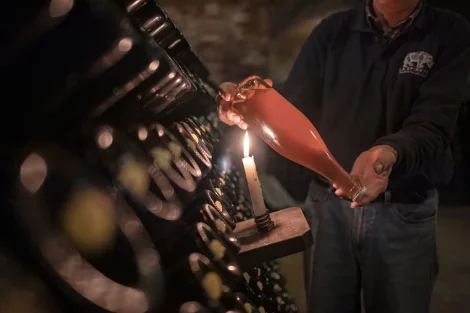
Photo credit: Contratto_Alessandro Sgarito_Archivio Ente Turismo LMR
Thus, after receiving UNESCO recognition, one of the mistakes to avoid is “feeling as though we have arrived, when instead what is needed now is to strengthen our ability to preserve and protect local institutions. Let us remember that this recognition of Italian Cuisine has less to do with the macro dimension and much more with the micro one — and this applies even more to the wine sector. Because preserving the authenticity and originality of our cuisine means helping the wine world to better support this recognition of our gastronomy.”
The training issue
The director of the Prosecco DOCG Consorzio, Diego Tomasi, on the one hand emphasises the fundamental role of wine as a cultural element of Italian cuisine: “The extraordinary variety expressed in a record number of PDOs pairs perfectly with the richness of our gastronomic heritage.”
But, on the other hand, he highlights several unresolved problems: “Among these is the lack of professional skills. We promote our Conegliano Valdobbiadene, we boast a very long experience in producing it, we are at the forefront of vineyard management, and since 2019 we have had UNESCO recognition for the landscape. The economy has grown, tourist numbers have increased (+30% from January to August 2025, with 154,000 visitors), yet today only 54% of facilities have staff dedicated to guest hospitality. This is still a low figure, which must grow because nowadays it is necessary both to know the history of the estate and to be able to speak foreign languages.”
These issues are certainly not exclusive to the Prosecco Superiore area but are common across Italy, where there is still significant room for improvement.
There is another piece of data that emerges from an internal survey by the body chaired by Franco Adami: “Almost 30% of the companies that offer hospitality and wine tourism services,” Tomasi explains, “do not communicate this adequately on their websites. The importance of this aspect has still not been understood. For this reason, more investment is needed,” especially at a time when an extension of the tourist season is becoming apparent.
And, looking to the future, the consorzio has two cards to play. The first is the growth of Prosecco DOCG in the ancestral style (col fondo, on the lees), and the second is the welcome discovery of versions aged in the bottle for at least two years, as opposed to being consumed young: “We are discovering the longevity of our wines,” Tomasi concludes, “and this can only make it easier to pair them with Italian cuisine.”
The fight against Italian sounding
Trade associations, meanwhile, have seized the opportunity offered by UNESCO’s approval of Italian Cuisine to push once again the themes of promotion and the defence against Italian sounding, a thorn in the side of the PDO economy.
“This result,” comments Raffaele Drei, president of Confcooperative–Fedagripesca, “is an extraordinary opportunity to enhance our supply chains. By leveraging this prestigious achievement, it will be possible – just as Minister Lollobrigida has often hoped – to carry out communication campaigns to promote all Made in Italy products, from food to beverages, including wine, both in Italy and abroad.”

Coldiretti insists on the possibility of “recovering part of the value lost to Italian sounding, to safeguard employment—as president Ettore Prandini has stressed—but also to return economic value to farmers.”
According to the president of Federdoc, Giangiacomo Gallarati Scotti Bonaldi, PDO wines are a fundamental component of Italy’s gastronomic heritage: “The UNESCO recognition also brings a responsibility: to continue with renewed commitment in the protection and promotion of PDOs, which stand for quality, traceability, culture and sustainability.”
Federvini, through its president Giacomo Ponti, highlights how this UNESCO milestone “does not celebrate only the dishes, but the entire culture of the table, where our oenological excellences, spirits, liqueurs, traditional bitters and vinegars all play leading roles.”
Assoenologi, via its president Riccardo Cotarella, reminds us that wine “is fully part of this recognition, because it is an integral element of our cuisine and our history. If consumed in a moderate, balanced and conscious way, it is a food of fundamental importance. Medicine and science confirm its value within healthy lifestyles.”
The Unione Italiana Vini recalled the words of Prime Minister Giorgia Meloni, according to whom Italian cuisine is also wealth and work: “And wine,” concluded Lamberto Frescobaldi, “contributes decisively to these aspects too, with a positive foreign trade balance of around €7.5 billion per year.”
 The Italian restaurant inside a clothing factory in London
 Equalitas, exports and breaking the rules – why Casale del Giglio works
 'You have to let British people fall in love with Italy'
 Why ABFV Italy chose a quarry for its new Bolgheri winery
 Casa Vinicola Coppi pays tribute to its founder with forgotten grape variety