By Serena Curto
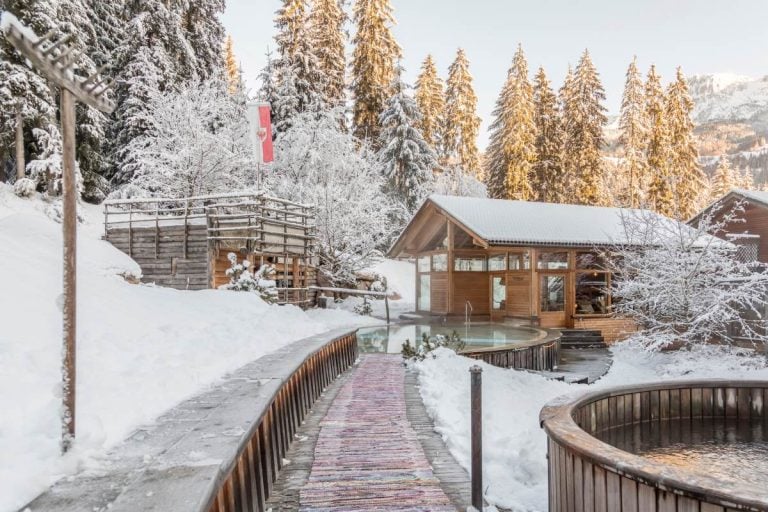
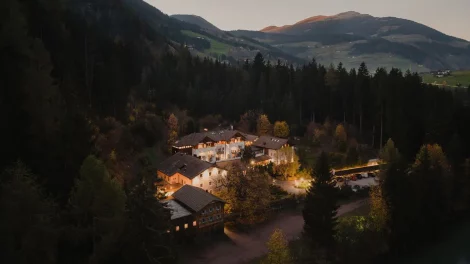
A valley immersed in woods, 600 kilometres of trails and more than 550 still-active farms. This is Val Sarentino, just 15 minutes by car from Bolzano. It is here that Bad Schörgau rises, a wellness hotel that also embraces a deeply rooted mountain cuisine.
Bad Schörgau, the alpine refuge to try
The roots of this place go back to 1624, when the ferruginous and sulphurous spring was mentioned for the first time (from which the tradition of the farmers’ bath was born). Four centuries later, Gregor Wenter (and before him his family) passionately leads what has become a true nerve centre of holistic wellbeing that meets gastronomic excellence and well-crafted hospitality.
“I love food, health, conviviality and spirituality, in which daily routine is rethought and leads to personal wellbeing,” he says.
The Silhouette-Gourmet Spa intertwines with the kitchen, following a path that makes the guest the protagonist of a kind of regeneration of body and mind. The detox programme indeed passes through hydrotherapy, regenerating sleep, mindful eating and treatments aimed at restoring natural balance. But what is truly interesting at Bad Schörgau is the cuisine, which presents itself as an act of pure listening.
The hotel houses two gastronomic offerings that dialogue with one another: Stube1988 – where South Tyrolean tradition takes shape in menus of just four courses – and Alpes – a space of contemporary research and storytelling whose philosophy is driven by fermented foods and fresh regional products. At the same time, the wine cellar reflects the same sensitivity, with a careful selection that highlights Alto Adige (many of the wines are produced by young South Tyrolean winemakers) as well as international wines.
A young chef
After the experimental work on fermentations and food transformation processes carried out here by chef Mattia Baroni starting in 2019, first with the La Fuga project and then with the start-up The Garum Project (to which Baroni now dedicates himself after leaving Bad Schörgau), there is now a new chef at the helm of this kitchen. Matthias Kirchler is 32 years old and has a deep connection with his land.
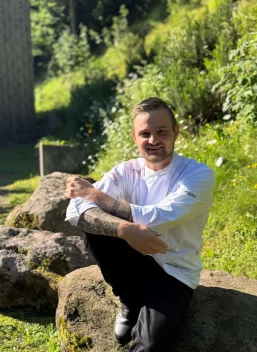
Born in Rio Bianco, in the Ahrntal Valley, he learned early on what it means to cook in the mountains, helping his parents run an alpine refuge. Today that experience takes shape in a radically territorial vision, built together with producers from Val Sarentino. Meats, vegetables, wild herbs and freshwater fish—trout, char, catfish—become the living material of a cuisine that favours open flame, embers and fermentations. From scraps come broths and vinegars (“like our tomato vinegar, which we use to make our Bloody Mary,” he says), kombucha and ferments capable of offering local products even out of season.
His idea of the mountains reaches its highest expression in 'La Alpes Experience – 1988', a five-part journey – for a total of fifteen courses – each linked to a sense: seeing, hearing, touching, smelling and tasting. It is a narrative of impressions: small bites that include broths to be sipped slowly, dishes that play with aromas, textures and temperatures. The guest is guided, sense after sense: there is beef dashi to be drunk hot directly from its dish; grilled alpine pork with kimchi; or cold alpine trout cooked in quince acidity and then – now a house signature – bread made from old bread, served with whipped koji cream.
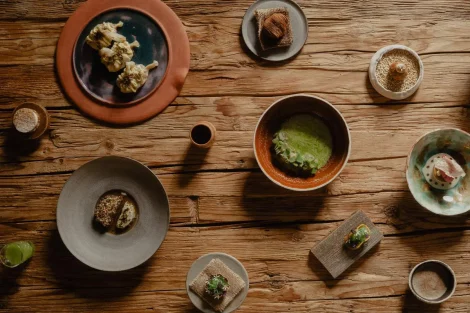
In parallel, the historic 'Veranda' retraces the authentic sense of conviviality in the 'Locanda': trolleys bringing back to the table typical cheeses, symbols of a cucina di recupero, such as graukäse (literally “grey cheese”), but also “quick salami” (pancetta marinated with barley koji) and even garden fennel baked in a salt crust with Sarentino beef. A territorial cuisine, but above all radical and sustainable, for appreciating the taste of the mountains with all our senses.
Putzen – Pozza, Runggener – Str. 24; 39058 – Sarntal – Bolzano; Tel. 0471 623048; Instagram
 'Old vines are a fundamental part of the identity of this wine'
 The Italian restaurant inside a clothing factory in London
 Equalitas, exports and breaking the rules – why Casale del Giglio works
 'You have to let British people fall in love with Italy'
 Why ABFV Italy chose a quarry for its new Bolgheri winery