By Giulia Salis
Brussels is counting down. At the end of the month the Christmas lights will be switched on: the tree in Grand Place, the little houses in Place Sainte-Catherine. Brussels is like that: it constantly changes appearance, in an alternation of souls that make it a city not easily deciphered at first glance. It lives through layers — cultural, linguistic, gastronomic — as complex as its administrative structure (did you know that what we consider Brussels is actually a union of many municipalities stuck together?). There are the elegant façades of Ixelles mixed with the vitality of the African neighbourhood of Matongé, the orderly boulevards of Etterbeek, the institutional bustle of the European Quarter, the more creative streets of Saint-Gilles: every detail adds a piece to a mosaic of energies and differences. Here every culture finds a home and contributes to shaping the city’s personality.
A personality that also expresses itself at the table. Alongside Belgian cuisine, often unjustly underestimated — beer stews, fries, mussels — you find cuisines from all over the world, which over the years have shaped the gastronomic vitality of the capital. Italian identity, too, is not a niche but a highly developed presence: chefs, pizza makers, bakers, entrepreneurs, students, families. Communities that arrived at different moments in history and built a solid restaurant scene, capable of speaking to the local public without betraying its roots.
And in recent years Brussels has taken a leap forward. It is no longer (only) the city of “classic” Italian restaurants. It has become a laboratory where regional trattorias, new-generation pizzerias and more ambitious projects capable of intertwining Italy and Belgium without clichés coexist. A city where some places are frequented almost exclusively by Italians and others by an international, curious public. This mini-guide was born like this: from a few days spent observing, tasting, comparing, trying to understand what idea of Italy Brussels conveys today, and which places are worth noting. It is not an exhaustive list nor a ranking, but a journey through different neighbourhoods, different experiences, different culinary visions that move closer or further apart depending on the chef’s style or background. Six addresses, each with its own character. A small trip that, in the end, gives the impression of an Italy more alive than ever, but above all decidedly multilingual.
Ristorante San Daniele
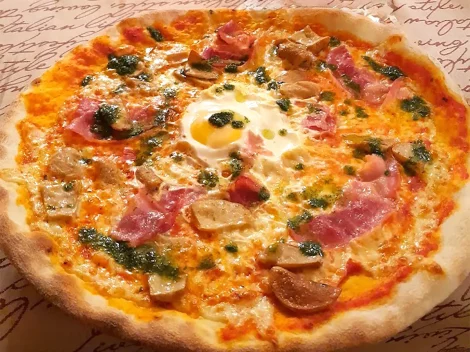
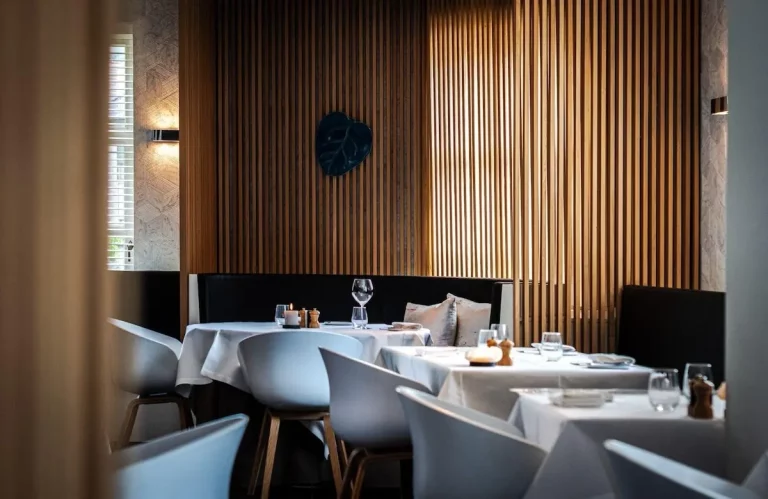
Since 1983, the year it was opened by Antonio Spinelli and his wife, San Daniele has built an important reputation in the Italian dining scene of the capital. At the beginning of November it changed location, leaving the city for a small nearby village with only a few inhabitants. And we can only be happy about this: the restaurant definitely needed a breath of fresh air, which it found in its current, more contemporary and warm premises. We are still looking at a cuisine that expresses classic elegance and a traditional Italian language, ranging from vitello tonnato to Prosciutto di San Daniele and tajarin with truffle.
San Daniele – Dorpsplein 3, 1700 Dilbeek – restaurant-san-daniele.com
Senzanome
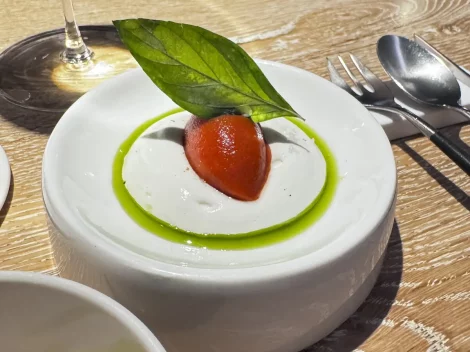
We are in the Sablon, the district of art, antiques and chocolate shops dressed like jewellery boutiques. Here Senzanome tells the story of our gastronomic culture with rare maturity and the ability to integrate with Belgian territory without losing identity. The credit goes to Giovanni Bruno, a chef who has worked in this city for thirty years and who knows very well what it means to cook Italian food outside Italy: not replicating, but interpreting also through local ingredients. Excellent the prawn cappuccino with Parmesan potato foam, wonderful the take on the caprese with stracciatella emulsion and tomato sorbet. Very high-level service, an elegant yet relaxed dining room and an excellent wine list, exclusively Italian and with prices for all budgets, with a well-prepared, attentive maître.
Senzanome – Pl. du Petit Sablon 1, 1000 Brussels – senzanome.be
Nona – Pizzeria & Pasta Bar
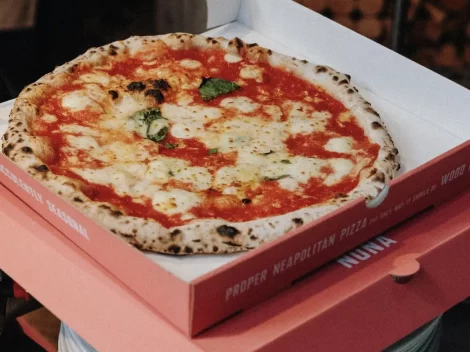
Nona is one of the city's most dynamic businesses. Present in several neighbourhoods, from Saint-Gilles to the Bailli area and the centre, it was founded on a simple and interesting idea by Belgian owner Sebastien Dupont, who left a finance career to create something unique. The team is entirely Italian and the philosophy clear: Neapolitan pizza made with Belgian products (even the mozzarella is Belgian), except for those ingredients that cannot be substituted for identity reasons. The result? An essential menu featuring soft, well-leavened contemporary pizza. The atmosphere is young and informal, a pleasant format with a pop vocation that works.
Nona – Rue Sainte-Catherine 7, 1000 Brussels – nonalife.com
La Piola Pizza
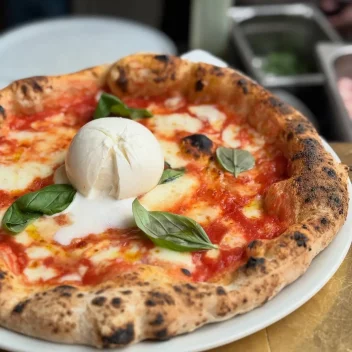
That good pizza is no longer eaten only in Italy is now a given, and La Piola confirms it. A young atmosphere, like its owners, Italian service, a place that is always full. The pizza is Neapolitan, well leavened, light, tender, made with carefully selected Italian ingredients: San Marzano tomatoes, Vesuvian cherry tomatoes, Emilian cured meats. And the prices remain reasonable for the capital: pizzas made very well, light and truly good. The wine list, also Italian, is short but convincing, by the glass or bottle. There is also an interesting selection of cocktails and light beers, such as Birra dello Stretto. Today, the brand is present in three locations across the city, including the fun Wolf Food Market. It’s one of those pizzerias that really make you happy: coherent, good, contemporary.
La Piola Pizza – Pl. Saint-Josse 8, 1210 Saint-Josse-ten-Noode, Belgium – lapiolapizza.com
Osteria Bolognese
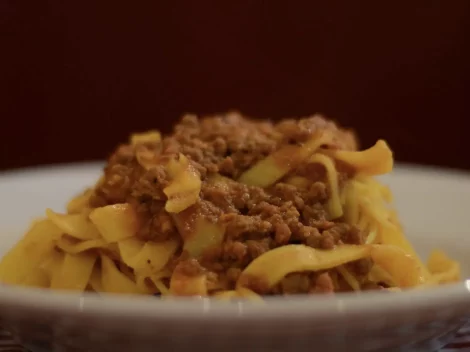
There is also room in Brussels for the simplest Italy, that of home and slow Sundays. Osteria Bolognese, in lively and multicultural Ixelles, is exactly this: a trattoria that does not pretend to be anything else, hugely popular among Italians living in the city. The cuisine is genuine, unadorned Emilian: tigelle, lasagne, tortellini. Some technical imperfections exist, but the atmosphere is so homely that it compensates. It is a place where you feel good, welcoming and warm, appreciated above all for its informal soul and its idea of tradition. One of those places that do not look to impress, but to make you feel comfortable, and above all to “correct the image of spaghetti bolognese”, as the friendly owners say.
Osteria Bolognese – Rue de la Paix 49, 1050 Ixelles – osteriabolognese.be
MangiaSempre
Far from the chaos of the centre, in Forest, MangiaSempre is a small shop with the soul of a gastronomia. Behind the counter is Giulia Bevilacqua, from Perugia, who started baking focaccia during lockdown and today offers weekly-changing sandwiches and simple small-kitchen dishes with a straightforward honesty. Ten or so seats, simple, warm, without frills. Giulia shares the project with her partner, brewer Florian van Roy, known as Chef Flo. It’s the kind of place where you stop for five minutes and end up staying: cheeses and cured meats to share on the terrace, pasta and preserves to take home, and a selection of wines that always works. Alternatively, there are local craft beers, from Brasserie de la Mule to Cantillon.
MangiaSempre – Rue des Alliés 196, 1190 Forest
 How ultraviolet rays can improve wine
 What is Ormeasco?
 The role mapping played in the creation of one of Alto Adige's best Sauvignon Blancs
 'Campo de’ Fiori is no longer a market': The transformation that no one talks about
 'Excellent products will remain excellent' – but does Old World wine have to adapt to survive?