by Jacopo Manni
For twenty years we have looked at China with enthusiasm and with the confidence of those who know they have something precious to offer. It seemed the perfect market: vast, expanding, and curious about the world. We presented our wine as one offers a noble gift, convinced that telling our story and our tradition would be enough to win over new consumers.
We explained our wines by describing their tannins, acidity, and minerality; we talked about soils and terroir, about landscapes and culture. We believed that taste was a universal language, a shared experience that needed no translation. But then, we realised it wasn’t so.
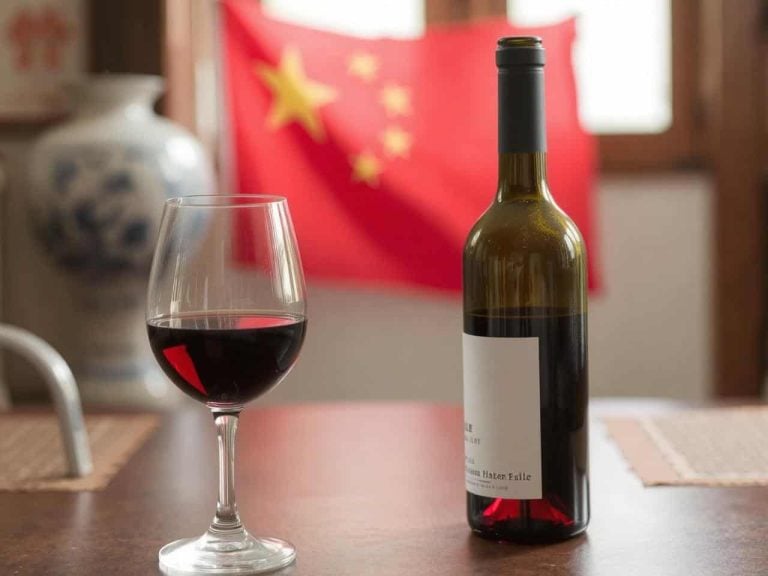
China listened, tasted — and, in the meantime, began to study. The first warnings arrived in 2024: Italian wine exports to China dropped by 10.2% compared to the previous year, according to ISTAT data. A figure that marks the beginning of a new and more uncertain phase.
The Italian mistake in China
Taste is not a natural fact. It is a cultural construction — a way of giving meaning to the world.
Geographer Elena Dell’Agnese of the University of Milano-Bicocca explains it clearly: what we eat is also, and above all, a sign of identity, a boundary, a form of belonging. Food and wine tell the geography of power, memory, and symbols. And when you export a flavour, you also export a system of values.
Italy — which has made wine an emblem of its culture — thought that it was enough to share that culture to make it understood. In reality, it brought its own idea of taste to the world, without fully realising that every country has its own.
As Fuchsia Dunlop, the first Westerner to train as a chef at the Sichuan Institute of Higher Cuisine, writes lucidly: “Chinese cuisine is not a collection of recipes, but a philosophical system of taste.”
It’s a way of thinking in which the relationship between flavours matters more than individual notes. Balance is the goal; dissonance, a mistake.
Chinese cuisine springs from a worldview in which each element must coexist harmoniously with others — a thought derived from centuries of Taoism and Confucianism, where food is not merely an aesthetic experience but a form of knowledge.
In this perspective, a wine considered refined in Italy may seem excessive, while a flavour we might call simple could be perceived as elegant and measured.
In the early 2000s, Italy tried to “educate” the Chinese consumer — as if teaching them the grammar of wine would make it familiar. It was an approach more cultural than commercial. Often without realising it, we behaved like a colonial power of taste.
New approaches to Chinese culture
Meanwhile, we failed to notice that in China wine had become an object of scientific research.
Universities, design centres and neuroscience labs are now studying how wine is perceived, described, and experienced by Chinese consumers.
Two studies published in 2025 — Rethinking Wine Tasting for Chinese Consumers: A Service Design Approach Enhanced by Multimodal Personalisation and Designing Wine Tasting Experiences for All: The Role of Human Diversity and Personal Food Memory — mark the emergence of a completely new approach to wine culture, where sensory experience is analyzed with the same rigor used for cognitive behaviour or linguistic acts.
In Rethinking Wine Tasting for Chinese Consumers, researchers propose a sensory service-design model combining technology, psychology, and gastronomic culture. Through interviews, ethnographic observation, and digital prototypes, they explore how Chinese consumers interpret wine, how they construct the pleasure of drinking, and which sensory metaphors they use to describe it.
The goal is not to translate the Western language of tasting but to create a new vocabulary rooted in local cultural experience — olfactory memories, familiar textures, chromatic and tactile associations linked to everyday food. The result is a tasting model that communicates more with memory and imagery than with enological technique.
The second study, Designing Wine Tasting Experiences for All, expands this perspective by introducing the notion of sensory and cultural diversity. The authors analyze how taste perception varies according to age, origin, dietary habits, and even individual sensory capacity. Through immersive tasting experiments and multi-sensory interface prototypes, they show how wine can be “re-imagined” as an accessible, empathetic, and customisable experience.
Attention thus shifts from product to visitor, from the wine itself to the relationship the body builds with it.
The end of wine as a status symbol
In these studies, wine is no longer a status symbol or collector’s item; it becomes a field of cognitive and cultural exploration.
It is the meeting point between a millennia-old gastronomic tradition — one that, as Fuchsia Dunlop reminds us, considers taste a form of knowledge — and a new scientific culture of perception, which uses artificial intelligence, augmented reality, and consumer psychology to understand how the emotions of taste are formed.
It’s a vision that shifts the focus from the bottle to the brain, from terroir to perception — showing how China is seeking to build its own modernity of wine, founded on study, sensitivity, and innovation.
Taste as dialogue, not imposition
China is an example of how a country can transform a foreign product into a laboratory for thinking about itself. For decades, Italy has exercised soft power, building around wine a narrative of authenticity, beauty, and landscape. That story has worked — but today, the balance is shifting.
Global taste is no longer a one-way flow from Europe to the world: it’s a dialogue among cultures that produces, interprets, and reinvents approaches to wine.
A new Italian model
Let’s be clear: Italy remains a giant in the wine world. In the 20th century it built a model that became an international reference point.
After the crisis of mass viticulture, Italy invested in quality, research, and terroir. It transformed wine from a peasant product into a cultural and technological symbol — a rare case of economic and identity renaissance that brought the country to the top of the global wine industry.
But today, the context has changed. The future of wine depends not only on quality but on the ability to understand the new languages of taste, to read their geopolitical and cultural implications.
Italy has already shown that it can change everything when change seemed impossible. It rethought viticulture, reinvented its global image, and turned wine into one of the most advanced expressions of national culture. That same transformative energy is needed again today — to face an era in which taste becomes an object of study, of politics, of innovation.
It’s what’s needed to remain a protagonist in a world where wine is not just tradition, but knowledge.
Italian wine was born as a peasant legacy, became an industry, and then culture. Now it can become research. Italy has the experience, the territories, and the expertise to lead this new era — but it must start looking forward again.
Revolutions of taste do not happen once and for all. They happen every time the geography of the world changes.
 Wine is changing its place at the table
 The Rioja you don’t expect: whites that keep pace with the reds
 The soul of Maratea amid crystal clear sea, monuments and breathtaking views
 How Amarone changes its skin
 From the distillery to the global market: the numbers and identity of an Italian brand