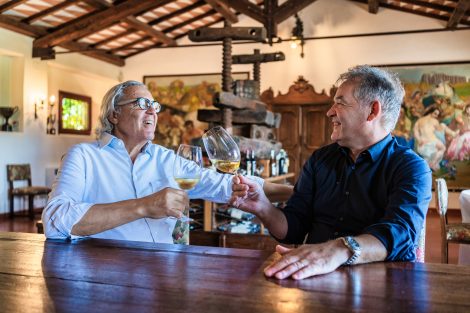
"The more years pass, the more I regret not celebrating something. It's important to celebrate when we have the opportunity," remarked Gaia Gaja. Last week's celebration, held in the basement of 67 Pall Mall, was in aid of the 30th anniversary of this Barbaresco dynasty's acquisition of its Bolgheri estate.
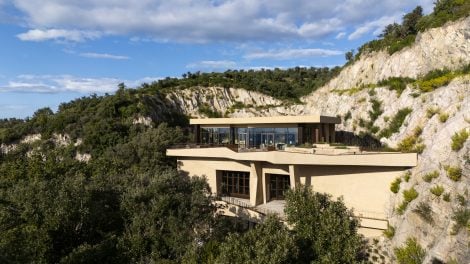
The name 'Ca'Marcanda' is a Piemontese expression for a 'house of endless negotiations', a reference to the time it took Angelo Gaja, then in his 50s, to seal the deal.
"We helped to move Barbaresco from the borders of the world of wine closer to the centre. That was possible thanks to belief, conviction, and a slightly contrarian attitude, especially from my father and grandfather. Excellence can be found where no-one is looking yet," said Gaja.
In 1996 Bolgheri was still relatively obscure with fewer than 10 wineries, a far cry from the 60 plus of today.
A Cabernet affair
"My father [Angelo] cheated on Nebbiolo with Cabernet," joked Gaja.
Indeed, Bolgheri did have a certain 'international' allure for the Gaja family.
"In Piemonte the land has always been the land of the farmers, in Bolgheri it was the land of the nobility. They would travel to other countries and marry," said Gaja. "It's an eclectic world, and that's why Bolgheri cultivates international wines."
In Ca'Marcanda's case, this originally meant the cultivation Cabernet Sauvignon, Cabernet France and Merlot, however the latter variety, which made up around 50% of the blend from the first vintage in 2000, fell out of favour. From the 2015 vintage onwards, that Merlot was re-grafted with later ripening varieties which could better cope with the rocky soil and warm climate, with the blends of the last decade being around 80% Cabernet Sauvignon and 20% Cabernet Franc.
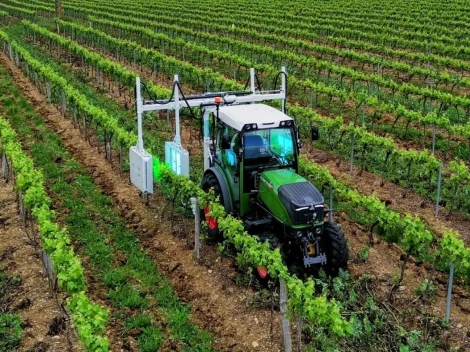
The vine training system has also been shifted towards half cordon and half guyot.
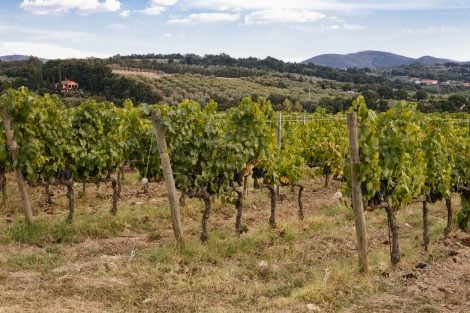
"It is both a necessity and a stylistic choice. The necessity is related to esca, which particularly affects Bordeaux varieties, but with guyot there is less trunk to be affected. With guyot you also postpone the ripening of the grapes. With cordon, the bunches tend to be more compact and give more fruit expression, with guyot they tend to be a bit longer and give more acidity."
Finding the right identity
Change has not just taken place in the vineyard. The 'Gaja' name ceased to appear on the bottle label between the 2020 and 2021 vintages.
"It could have been a problem commercially, as Gaja is a very well-known brand, but from an identity point of view it would have been a mistake," commented Gaja. "It [the 'Gaja' name] doesn't help to recognise the achievement of the team and the quality of the land in Bolgheri. Also, people think of Gaja as Piemonte, not Tuscany."
Although regional identities are at play, and the blend entirely consists of international varieties, Gaja has striven for what it refers to as an "Italian-ity" to its wines: "When you think of Italian food, the dishes are the triumph of the ingredients – they are not covered by sauces. That cleanness is the Italian style, that's what we try to get in our wines."
This is why Ca'Marcanda winemaker Giovanni Passoni is very careful with his use of oak, opting for 18 months in wood (60% tonneaux, 40% barrique) followed by six months in concrete.
New release
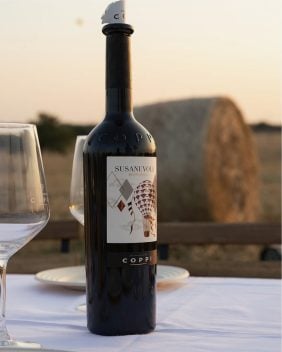
This London celebration served as an occasion to taste the new vintage of Camarcanda on the market, 2023.
Gaja suggested that '23 was not "a Bolgheri vintage": "People expect bolder, riper wines like 2015. The 2023 is on the lighter side, but the winemakers like its finesse and elegance. Abundant spring rain helped to give us juicier berries. It's supple with a medium body. It's almost floral, which is difficult to get in Bolgheri."
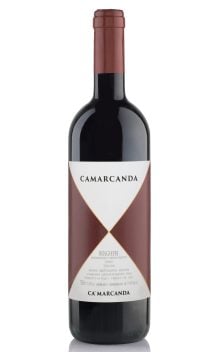
The 2023 is certainly a departure from the result of the "extremely dry and hot" 2022 and the "opulence" of 2021. In fact, 2023 is already very pleasant to drink, with pretty fruit and softened tannins, though it may not have quite the same cellar longevity as some of the older vintages of Camarcanda. However, only time will tell, and its good level of acidity will certainly be an asset for further ageing.
One cause of stress during the 2023 growing season was the abundance of mildew. 2024's climatic challenges were to prove more dramatic as a water bomb struck Bolgheri, with a season's-worth of rainfall hitting the region in the space of just a couple of hours. Some flooding aside, it was not a washout vintage for Camarcanda.
"The culture of blending here is a good help for climate change – we don't rely on one variety," said Gaja, who suggested that there are no plans to significantly change the blend composition in the future.
30 years after Angelo Gaja signed off on the acquisition of the property, this Bolgheri estate has well and truly found its feet, but his daughter noted that the family is not sitting back and relaxing: "There are always endless tiny things to improve."
 Gaja unveils 2023 vintage of Camarcanda
 'It’s not about pushing your own agenda and your own taste'
 Certification, sustainability and sparkling wine: Enrico Serafino's story
 'Old vines are a fundamental part of the identity of this wine'
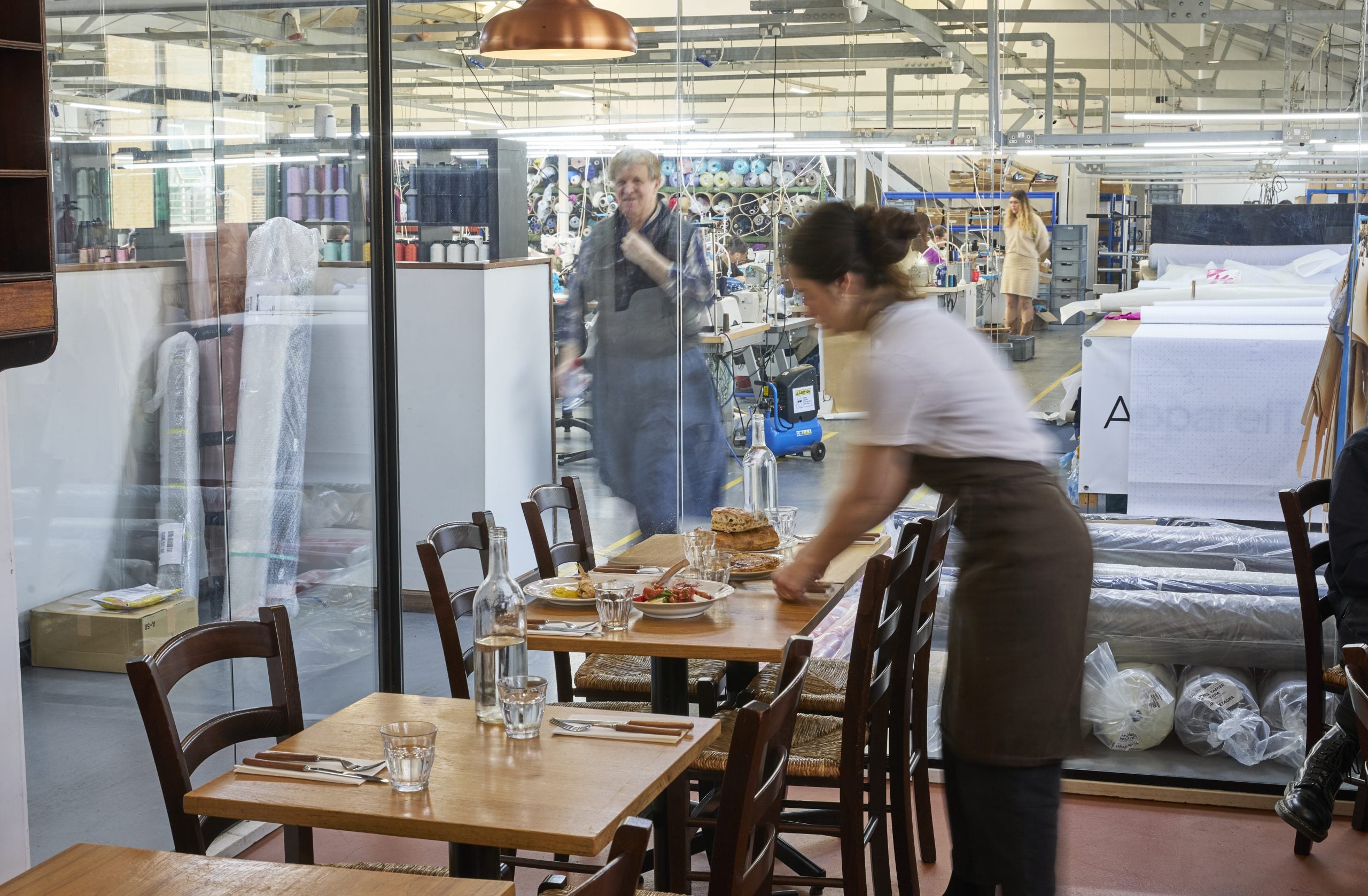 The Italian restaurant inside a clothing factory in London