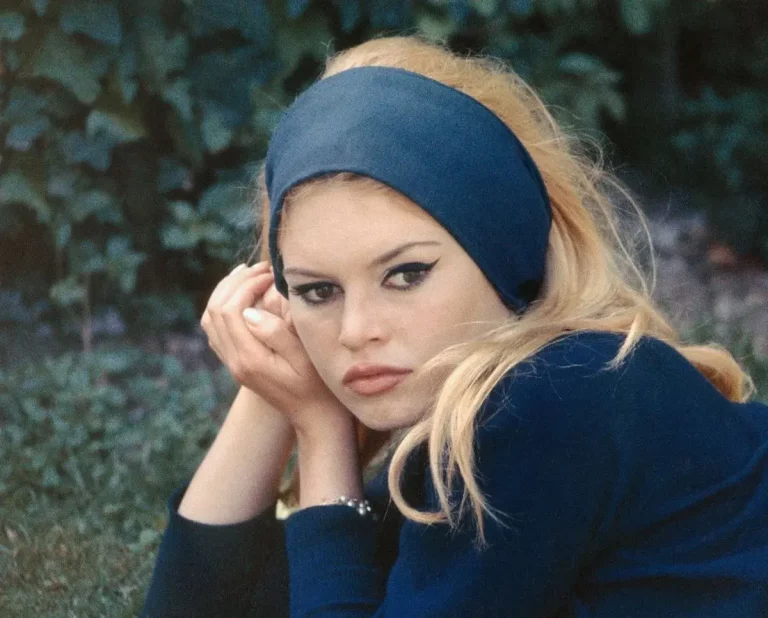
Brigitte Bardot has died at the age of 91. Her passing marks the end of one of the most recognisable figures in European cinema and culture of the twentieth century. A defining actress of the 1960s, Bardot starred in films that helped redefine the relationship between the body, femininity and individual freedom on screen, starting with Et Dieu… créa la femme.
After voluntarily ending her film career in the early 1970s, a second public life began: Bardot adopted first a vegetarian and later a vegan diet, tying her name to a constant and radical commitment to animal rights, an activity that occupied the centre of her life for more than fifty years.
In recent years, even far from the spotlight, her presence never disappeared from public discourse, often resurfacing through initiatives linked to her name and imagery.
Brigitte Bardot’s rosé
In February 2025, two rosé labels bearing the diva’s name were unveiled, produced in Provence in collaboration with the historic Famille Ravoire estate. The project concerns two wines tied to the region—a Côtes de Provence and an IGP Méditerranée—and was described by its promoters as an initiative oriented towards a classic, recognisable style: pale rosé, dry, and immediately drinkable.
A wine intended for everyday enjoyment, yet consistent with the most authentic image of Provence, far from ostentatious luxury. It is not, however, Bardot’s first link with the wine world: in the past her name had already been associated with a Champagne cuvée, making this rosé project part of a longer, non-occasional path.
Tea, coffee… or rosé?
In this context an anecdote recounted by Gigi Rizzi comes to mind: he visited La Madrague, Bardot’s home in Saint-Tropez, one morning. When the diva asked whether he preferred tea or coffee, Rizzi replied by asking for “a glass of rosé”. A lighthearted episode, one that requires no interpretation, and which has remained in the collective memory as a snapshot of an era and a certain way of living on the French Riviera—a detail of lifestyle more than a symbolic key.
A wine that closes the circle
In light of Brigitte Bardot’s passing, the rosé launched in 2025 now takes on a different meaning. It is not a project conceived as a tribute or posthumous celebration, but rather the last public chapter associated with her name, presented only months before her death and aligned with her long-standing connection to Provence.

As reported by Meininger International, the project emerged from discussions between the parties that led to a precise choice: to create a premium, high-quality rosé with a restrained profile, avoiding an overtly “celebrity-driven” approach. For Ravoire et Fils, the Brigitte Bardot rosés are intended as a tribute to Mediterranean heritage, reflecting the timeless elegance and free spirit that made Bardot a global icon.
 Gaja unveils 2023 vintage of Camarcanda
 'It’s not about pushing your own agenda and your own taste'
 Certification, sustainability and sparkling wine: Enrico Serafino's story
 'Old vines are a fundamental part of the identity of this wine'
 The Italian restaurant inside a clothing factory in London