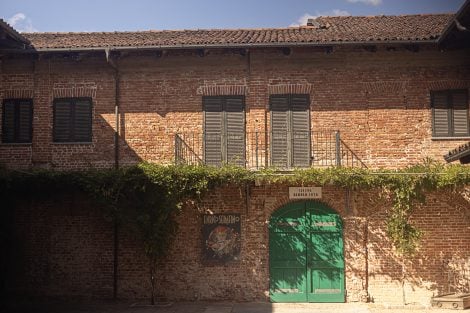
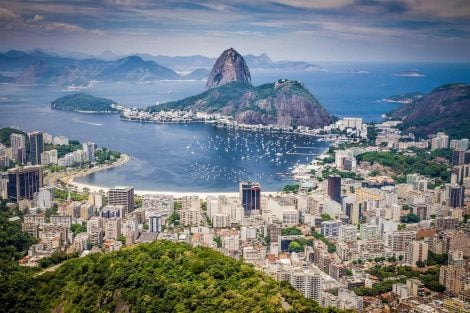
Brazil is, in some respects, synonymous with Veneto. A very strong bond that has lasted for over a century, born of the historic emigration of Italians to the Americas across the Atlantic. Nova Pádua — or even Treviso — are the names of Brazilian municipalities where many houses are built in the image and likeness of those found in the Marca Trevigiana. And where, for decades, local wineries have been producing sparkling wines and calling them 'Prosecco', using Glera grapes imported from Italy.
These sparkling wines are aimed at a broad market: Brazil has 30 million people of Italian origin, a significant segment of a total population exceeding 200 million. Brazil is the engine of Mercosur.
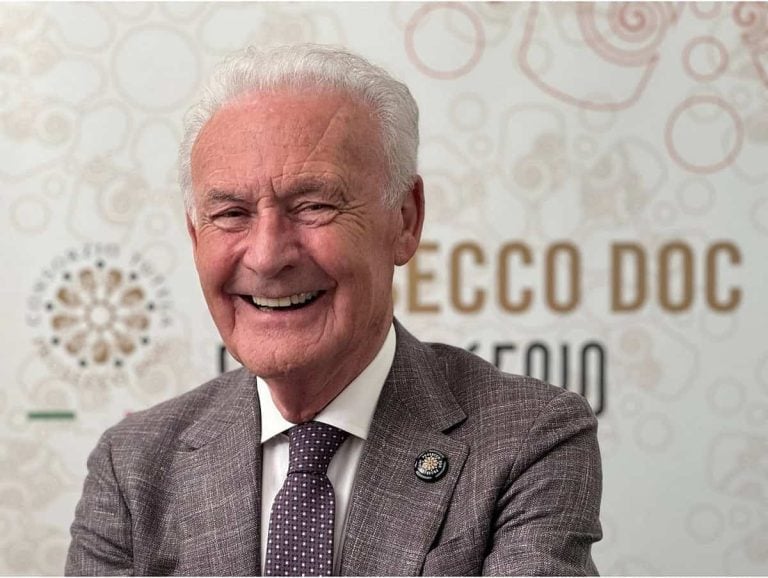
The trade agreement with the EU, which is expected to be signed in Paraguay on Saturday 17 January after a quarter-century of negotiations, will put an end to the circulation of these labels that Italian producers consider unfair competition. But it will take 10 years. Timelines that are too long and that do not resolve the long-standing issue of Italian sounding, as argued by trade unions such as Coldiretti. A necessary compromise — less than ideal, but ultimately acceptable — according to Giancarlo Guidolin, president of the Consorzio Tutela Prosecco DOC, who in this interview with Tre Bicchieri, the weekly newsletter of Gambero Rosso, outlines the strategies for protection and promotion.
Today, the DOC closed 2025 with 667 million bottles (+1.1% compared to 2024, including 60 million rosé). The most widely consumed wine in the world, with exports accounting for 82%, generating turnover of €3.6 billion, and set to bear the tricolour anti-counterfeiting strip starting with the 2026 Winter Olympic Games.
Let’s start with the numbers. Of the 660 million bottles of Prosecco DOC produced in 2024, what percentage is exported to Brazil and to the Mercosur as a whole?
Mercosur currently accounts for about 0.2% of our exports, equal to 1.08 million bottles, with an estimated turnover of €5.4 million. Brazil alone, with just over 800,000 bottles, absorbs more than half of that volume, followed by Argentina, Paraguay and Uruguay.
How do you assess this new commercial outlet looking ahead?
We welcome the conclusion of the EU–Mercosur agreement: a significant step towards consolidating the presence of our PDO in potentially strategic markets.
What will the agreement encourage?
More structured and coherent promotion, also encouraging companies to invest dedicated resources in exports to these countries, while ensuring proper protection and enhancement of Prosecco DOC.
In Brazil, where wines bearing the name 'Prosecco' circulate, how have you acted to protect the GI?
So far, we have not initiated legal action in Mercosur countries, as we have not identified violations serious enough to justify launching lawsuits likely to result in favourable rulings.
Why is that?
Had we taken action, the main difficulty would have been the lack of a regulatory framework on which to base our claims.
So, in the absence of protective rules, you did not pursue legal action because no judge would have ruled in your favour?
The agreement finally fills this regulatory gap.
And what will change with the future—still undefined—entry into force of the treaty?
For Prosecco DOC, the agreement provides for gradual protection through phasing-out periods. Those already using the terms 'Prosecco' or 'Proseco' may continue to do so for a limited time, provided they clearly indicate the product’s geographical origin. The timelines vary: five years for Argentina and Paraguay, ten years for Brazil. Only Uruguay will benefit from immediate protection. The text of the agreement is very clear on this point and precisely defines the requirements for the transitional use of the term.
Some trade unions, first and foremost Coldiretti, consider it disadvantageous that local producers may continue to use the names of Italian GIs on labels — including wine — for years. What is your view?
We believe that, at times, the perfect is the enemy of the good. Twenty-five years of discussion to secure the cessation of the use of the term 'Prosecco' by Mercosur countries starting from the signing of the agreement is more than twice the number of years needed to obtain protection in all those countries thanks to the EU agreement.

Brazilian President Luiz Inácio Lula da Silva and European Commission President Ursula von der Leyen
Would you change anything in the text of the agreement concerning the protection of wine GIs?
Ideally, there would have been immediate, full protection from the moment the agreement was signed, but after years of dialogue we understand the negotiating complexities.
The weaknesses are nonetheless evident.
The regulatory gap and the lack of recognition of the denomination are two factors we have taken into account over the years, but fortunately no serious violations have been recorded.
Are you settling for less?
Having been unable to achieve the optimum, we accept this good result, which within ten years will allow us to focus on the only remaining open front: Australia.
In the meantime, in May you had first-hand experience in 'enemy territory'.
Our first participation, in May 2025, at Wine South America — the leading trade fair in the state of Rio Grande do Sul, held in Bento Gonçalves — was geared toward promotion. We set up a stand shared with the Veneto Region to strengthen the product–territory pairing, with an intensive programme of training activities.
How did it go?
The feedback was positive: an attentive and curious audience confirmed the effectiveness of an approach that combines technical education with the promotion of territory, traditions and the organoleptic characteristics of our DOC.
Are you now considering further targeted actions in Mercosur?
Absolutely. Our strategy is structured along two fronts: training for the trade, operators and distribution on the characteristics of authentic Italian Prosecco, and, in parallel, raising awareness among end consumers so they can recognise and choose Prosecco DOC, appreciating its link to the territory of origin.
 Wine is changing its place at the table
 The Rioja you don’t expect: whites that keep pace with the reds
 The soul of Maratea amid crystal clear sea, monuments and breathtaking views
 How Amarone changes its skin
 From the distillery to the global market: the numbers and identity of an Italian brand