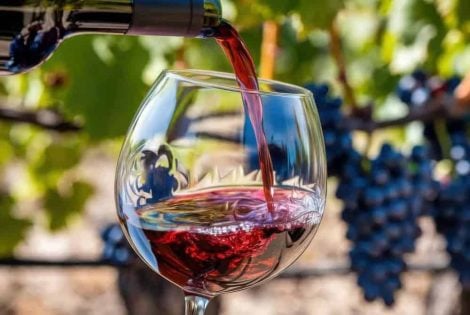

"When we founded Cusumano in 2001, we selected the best land for each grape in western and southern Sicily, distributed across different areas of the island that represent for us, the perfect synthesis of the multitude of possibilities this land offers," says Diego Cusumano, custodian of the company alongside his brother, Alberto, and father, Francesco.
The core philosophy behind the Cusumano project since its inception two decades ago has remained the same: "When we decided to embark on this project, we made a clear strategic choice: to work exclusively with our vineyards and to vinify only our own grapes. This approach ensured full control over quality at every stage of the process."
The brothers and their father began to travel across Sicily in order to delve into the various terroirs that the Mediterranean's largest island had to offer.
"We started close to Partinico, where the Cusumano winery was already located," says Cusumano. "The first estate was Tenuta Ficuzza, in Piana degli Albanesi. It’s a mountainous area of Sicily, between Palermo and Corleone. From there we arrived in Butera, home to Tenuta San Giacomo, where the white chalky soils are ideal for the Nero d’Avola. Then came Presti e Pegni and Monte Pietroso on the hills of Monreale, again close to Palermo, where the sea breeze blows in our vineyards."
Alta Mora
It was in 2013 that the Cusumanos had the opportunity to acquire 18 hectares on Mount Etna.
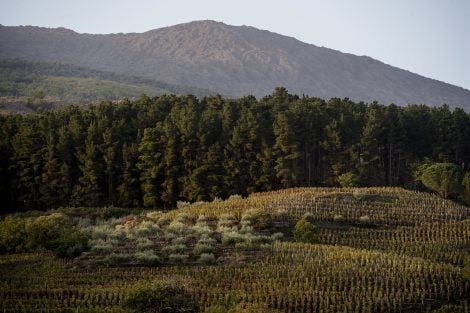
"After years of in-depth research into the territory, in April 2013 we were presented with a once-in-a-lifetime opportunity to acquire the first three contrade on the northern slope of Mount Etna. What began then is a constantly evolving project, starting with the restoration of the traditional dry-stone walls that shape the terraces of Guardiola. This contrada, with its breathtaking beauty, perfectly embodies the motivation and inspiration behind the entire project and, ultimately, gave it its name: Alta Mora," notes Cusumano.
As part of the investment, they restored the Guardiola terraces upon which the vines would be planted.
"Contrada Guardiola is a natural amphitheatre, with terraced vineyards located between 800 and 1,000 metres above sea level," explains Cusumano. "Restoring the dry-stone walls was essential to preserving the integrity and beauty of this contrada. The soil preparation, the reconstruction of the dry-stone walls with the support of a local craftsman, and the planting of Nerello Mascalese vines took approximately one year."
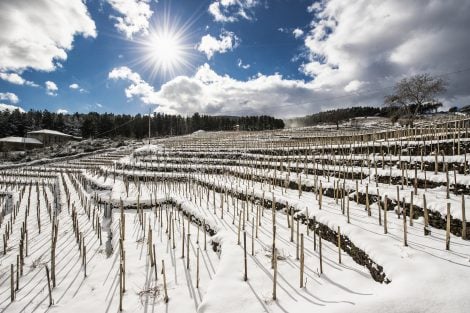
Around seven hectares of 'free-standing' Nerello Mascalese were planted.
"The Etna bush-vine (alberello etneo) project was an absolute priority for us, not only in this Contrada but also in others," he continues. "The choice of this original cultivation system allows very low yield per vine and controlled plant vigour, which leads to maximised quality."
The winery
It wasn't just a case of reconstructing the old – something new was also built.
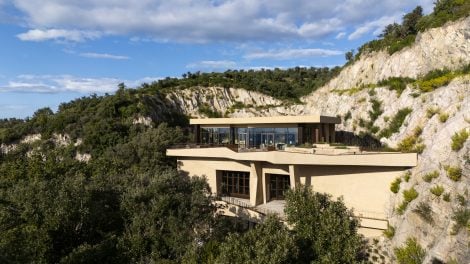
The winery in Verzella, just to the west of Taormina, was constructed "in accordance with the tenets of hypogean architecture, affording considerable energy savings thanks to natural heat insulation and the use of biomass energy," according to Cusumano.
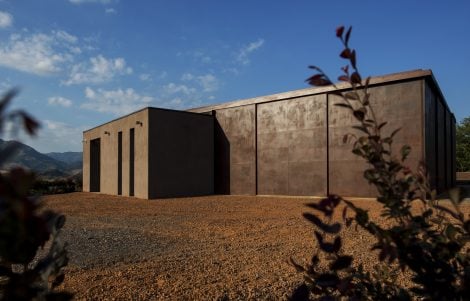
"Made with natural materials such as lava and opus signinum, the structure integrates seamlessly with the pristine natural surroundings. Cool in summer, mild in winter, the lava rock in the basement helps to keep and control temperature and humidity and with good shelter from the light, it ensures optimal conditions for all stages of winemaking."
The appeal of Etna
It might be argued that the wines of Sicily, and Etna specifically, have never enjoyed a stronger reputation than they do today, with this volcanic region on course for DOCG status later this year.
"You cannot imagine how magnetic Etna is! This territory is defined as an island within the island because it belongs to a world different from the rest of Sicily," argues Cusumano.
"Here rises the highest active volcano in Europe, or rather, a system of volcanoes that continue their activity today, constantly changing its height, shape, and influencing the territory. The area enjoys a marked climatic and soil variability, depending on the slope and altitude, defining diverse environments, all in different ways favourable to high-quality wine production," he continues.
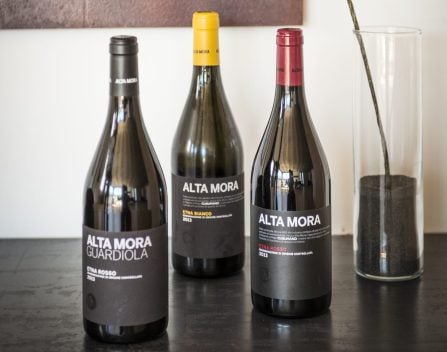
For Cusumano, that soil, with its mixture of ash, sand, lapilli (small stones) and pumice, is the key feature of the terroir, creating "distinctive wines born of lava".
"This kind of uniqueness is rare," he argues, "which is precisely why they have captured so much attention in the world of wine in recent years. Our wines are currently exported to and consumed in 60 countries worldwide, and our development strategy has consistently relied on building an efficient distribution and promotion network. This approach relies on time, as well as the ability to communicate and inspire love for wine, vineyards, terroir, and Sicily, while harmonising with the diverse cultures and food and wine traditions."
 Gaja unveils 2023 vintage of Camarcanda
 'It’s not about pushing your own agenda and your own taste'
 Certification, sustainability and sparkling wine: Enrico Serafino's story
 'Old vines are a fundamental part of the identity of this wine'
 The Italian restaurant inside a clothing factory in London