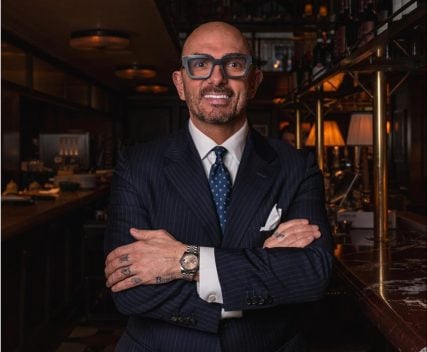
“Until the Pandemic, the alcoholic and non-alcoholic beverage spaces were distinct, but since the Pandemic we have seen a convergence of those categories," remarked Roy, who is senior vice president of market research company Circana. "The alcohol space is 9% of the total beverage universe, no/low-alcohol is only 1%, so it is a niche at the moment, but it is growing in terms of value by 10% and 6% in terms of volume. In a category, the alcohol business, that has overall been in the decline, this is a huge pocket of growth."
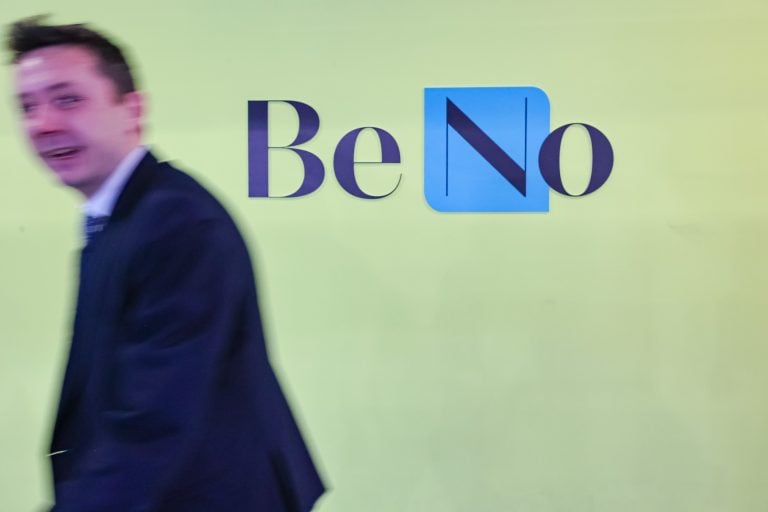
Indeed, part of the evidence for that growth is that an area of the show dedicated to non-alcoholic beverages – Be No – was launched at this year's edition.
Hybrid drinkers
“There is a proportion of consumers leaving the alcohol category, but the majority are looking at moderation and wellbeing benefits. They are hybrid drinkers," commented Roy, citing a recent survey where 43% of consumers claimed to have changed how they drink alcohol. "In the past, if you wanted to leave the alcohol category, you went to water or juices, now there is a range of options which give a refreshing tasting – there are innovative options becoming available without compromises."
According to Roy, the non-alcoholic category is largely eating into the water and juice market, rather than the alcohol market.
"The competition for no and low-alcohol is coming from water-based beverages. It is from energy drinks, sports drinks, functional beverages."
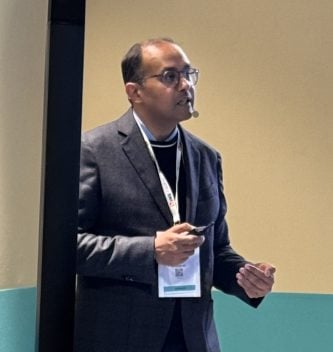
Ananda Roy
As for why people might want to opt for non-alcoholic drinks, a survey of US consumers presented by Roy showed that for 32% health reasons were a factor, 23% cited economic reasons, 18% claimed that they socialise less now, and 4% said these drinks were a substitute for legalised cannabis use.
The cost factor is all the more interesting because non-alcoholic drinks are not necessarily cheaper than their alcoholic counterparts. Roy picked out the example of Bolle, a non-alcoholic wine brand which is sold in Michelin-starred restaurants and retails at a higher price point, £49.99 in the case of its Grand Reserve Blanc de Blancs.
"You are now seeing a category where terroir, taste and flavour are used as a reason to premiumise the category. They are not necessarily the cheapest on display."
Private label
At the other end of the pricing spectrum are private/own label non-alcoholic drinks from retailers.
"Retailers are very very interested in growing and shaping this category," said Roy. "Private labels currently have 16% value share, which is quite a strong performance in growth markets like the UK."
However, while these private label products do tend to be cheaper, Roy pointed out that there is only a 15% gap on average between the pricing of private label non-alcoholic drinks and branded ones.
"For producers, your biggest competition won’t necessarily be other producers, but will be retailers entering the space," he said. "Retailers are delivering premium offers and competing very effectively with brands."
Roy also stated that being the first to the party does not necessarily guarantee commercial success: "It’s a 1% category, but growing at 10% a year by value - retailers are very active. Over the next 4-5 years, you will see more private labels. There is no first mover advantage. Learn from your competition when you bring something new to the market."
Is 'non-alcoholic' a single category?
What makes the non-alcoholic category so intriguing, according to Roy, is that it is still in a state of flux, and it is far from a consolidated beverage category: “It’s a nascent constellation of various consumer moments and several categories - even in wine you have 0% wines, non-alcoholic carbonated fruit juices, juices that are fermented, etc. At this stage the definition of the category is not clear. The category code is being written as we speak."
With technological developments and greater investment in the sector, the quality of the products is also improving too.
“Many non-alcoholic drinks are very sweet, but that is an early stage of the category. In the US it is moving towards a sour, more sophisticated taste," he said. "It’s a very early stage in the category, and the rules are still being written."
Products like zero-alcohol wine are relatively new in the market, and celebrities including Kylie Minogue and, very recently, Elton John have jumped onto the bandwagon.
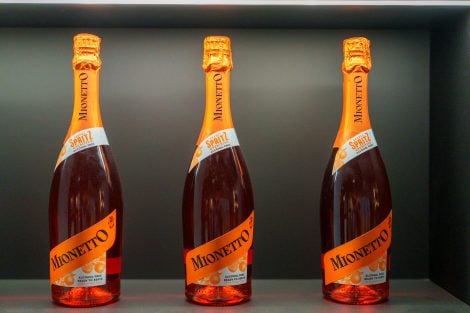
Image credit: Frederic Spaziale
Non-alcoholic beers meanwhile have been around for longer, and mega brands such as Peroni and Guinness have secured some major sponsorships for their 0.0 products, with the former partnering with the Ferrari Formula 1 team and the latter having its branding all over the rugby union Six Nations Championship.
Given these brands are now very much in the spotlight, be it through celebrity endorsements or at major sporting events, it begs the question of whether their growth is at the expense of 'traditional' wine, beer and spirits businesses. Drawing a parallel with the food sector, Roy concluded by suggesting that there is plenty of room in the market for alcoholic and non-alcoholic products: "When the sugar-free industry started 30 years ago, it positioned itself against sugar, but the consumption of sugar continues to grow by 6%. Both have a role to play. Similarly, 0% beer has been around for a long time, the big risk is to position itself against alcohol – the reason it’s growing is because it is sourcing demand from both the alcoholic and non-alcoholic categories."
 Gaja unveils 2023 vintage of Camarcanda
 'It’s not about pushing your own agenda and your own taste'
 Certification, sustainability and sparkling wine: Enrico Serafino's story
 'Old vines are a fundamental part of the identity of this wine'
 The Italian restaurant inside a clothing factory in London