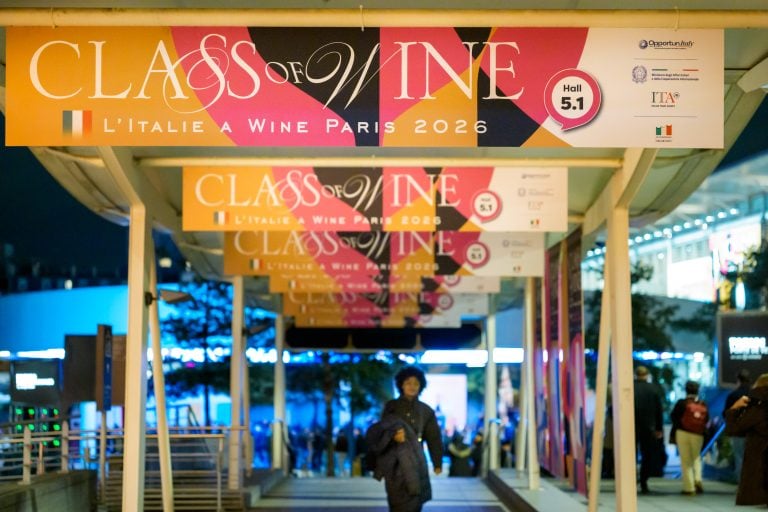
“Wine Paris is the engine of the wine business,” remarks Lorenzo Ficini, commercial director of Tuscan winery Arillo in Terrabianca.
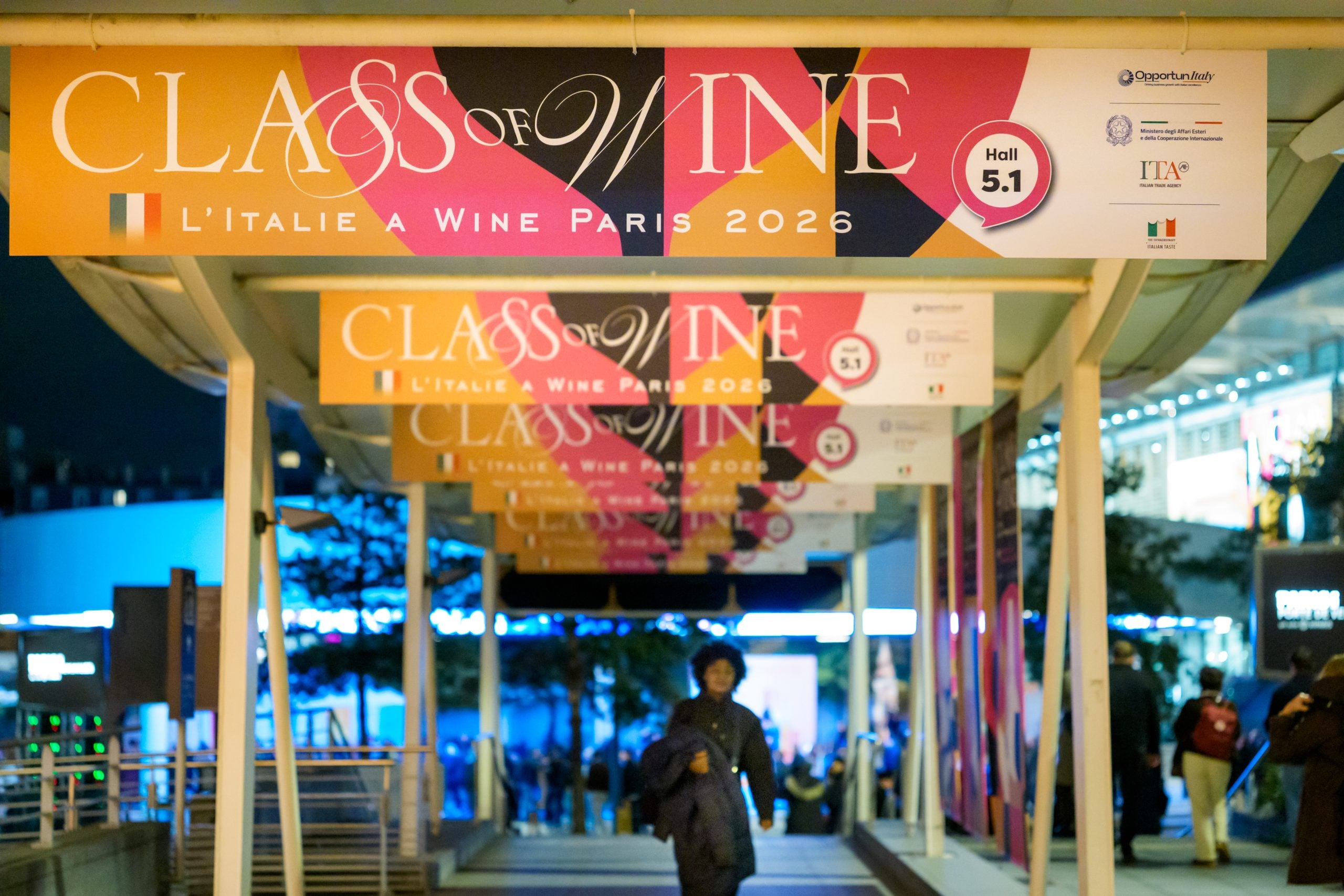
For Italian wineries, these three days in February have become an indispensable business opportunity. When it comes to territory, Italian companies certainly planted the tricolore in 2026, taking up approximately one fifth of the fair’s floor space, a 30% increase from last year.
The French market
Italy was the second-largest exhibitor, just behind the host country of France, and this friendly rival serves a purpose. Part of Wine Paris’ function is, according to some producers, as a form of benchmarking. The language of world wine is still largely written in French – ‘cru’, ‘méthode champenoise’, ‘en primeur’ – and French wine still has a certain glamour, even for Italian wine professionals.
“Let’s not forget,” says Ficini, “that French wines have not gone down in international prestige. Everywhere in the world, good restaurants will have a wine list that is 30-40% French, so French wine still has that perception of high quality. To have a wine fair where you can taste French wines from every appellation, that’s an important reason why people come here.”
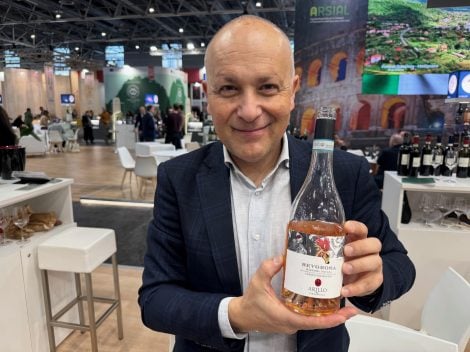
Lorenzo Ficini
But, this is an exchange which goes both ways, and part of the value of Wine Paris for Italian wineries is that France is a target market. In order to achieve this, producers have to actually get their wines in front of French buyers and importers.
“French people don’t drink Italian wine, but Italian people drink a lot of French wine – we are some of the biggest consumers of Champagne. Our goal is to let French people taste Alto Adige wines,” says Kellerei Bozen brand ambassador Elia Troiani.
One key advantage for Italian wine’s commercial success in the land of Bordeaux and Burgundy is that French diners love Italian cuisine.
“Italian wineries are lucky that there are so many Italian restaurants in France, and they sell 90% Italian wines,” remarks Giuseppe Fiannaca, export manager of famed Marsala producer Pellegrino.
Global presence
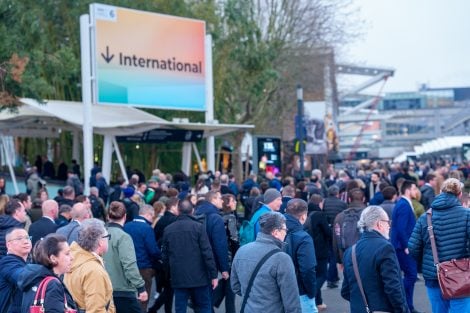
However, just as the strong Italian presence signifies an internationalisation of Wine Paris’ exhibitors, the same is true of the visitors, and this has made the trade show a truly global occasion for the drinks industry.
“I expected more importers and distributors from France, but less than 10% of those stopping by have been French,” says Ilaria Pederiva of the Conegliano Veneto distillery. “There were also more Americans last year. This year there is more diversity, especially from Eastern Europe.”
Pederiva notes that while the recent trade deal between the EU and India did create an expectation for high numbers of Indian attendees, the agreement was “probably too recent”, but she expressed a hope that this will be the case next year.
On the topic of spirits, given the extent to which a few Italian spirits giants – such as Campari Group – dominate the sector, for smaller businesses, trade shows like Wine Paris are about getting attention from an international audience.
“The important thing about being here is for us to get known,” says Alessandro Strinni of Distillerie Moccia in Ferrara, Emilia-Romagna. “In Italy our distillery is well-known, but outside of Italy we are not, that’s why we come here.”
Coming to America
Of course, one international market in particular was on the minds of exhibitors: the United States.
Troiani from Kellerei Bozen noted Prime Minister Giorgia Meloni’s efforts to appease Trump in a bid to lessen the blow of tariffs: “We are suffering, but we are moving on.”
Others suggested that the tariffs have left them largely unaffected. Among them is Giodo, which has vineyards in Montalcino and Mount Etna and also produced the Vini d’Italia’s Red Wine of the Year.
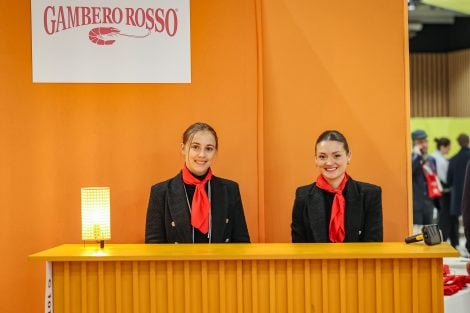
Image credit: Philippe Labeguerie
"Here [Wine Paris], we are focusing on European markets, but also on North America,” comments brand ambassador Chiara Bellacci. “Tariffs are not an issue for us because our wines are very high end and tariffs are more damaging to cheaper wines – being in the US is not about price point for us, it's about finding the right partner."
“Wine Paris is growing, and not to be present, even for a niche production like ours, is not correct if you want to be internationally recognised,” Bellacci adds.
Getting out there
Indeed, there is a feeling even among those who are not ready to go global yet that when it comes to whether or not to exhibit at Wine Paris, it is always better to be in the club than outside of it.
One Italian wine figure who espouses this viewpoint is Riccardo Binda, director of the Consorzio Vini Oltrepò Pavese, who notes that while the consorzio’s first priority is to grow this Lombard Pinot Noir powerhouse’s presence within Italy, there is still a value in meeting with international wine professionals.
“In the last 30, 40 years, Oltrepò Pavese has underperformed – many wineries struggled to sell bottles, so our focus is the national market at the moment, but if you sell wine, you have to sell it abroad too! Everyone is here at Wine Paris, and even if many people are here for French wine, it is still a good place for Italy. Since we’re developing, even the smallest bit done now is an improvement.”
The advantages of Paris
Binda also notes another reality of deciding which trade shows to attend and which to miss, one that is almost taboo to discuss but makes all the difference: cost.
“Paris is a very big city, so it doesn’t feel the fair,” he says. “The hotel prices aren’t jacked up, the taxi fares stay the same. The reason Vinexpo is successful today is because it moved from Bordeaux!”

Image credit: Philippe Labeguerie
Ficini from Arillo in Terrabianca echoes this sentiment: “Being in Paris makes a difference. It is very easy to approach logistically. Wine fairs have changed: you used to plan appointments a few months in advance, but right now, I know a lot of people are very flexible when it comes to organising their agendas, and the event being in Paris makes that easier.”
Indeed, a majority of Italian producers when asked for their opinions on Wine Paris cited the logistical and financial advantages of it over drinks trade shows. At a time when wine businesses are conscious of finding a fiscal balance in a challenging economic climate, considerations of how much to spend on shipping wines, travel, accommodation and, of course, renting the space at the fair, have to be accounted for.
A changing world
If this fair is a mirror to the drinks industry, then the busyness of the Be No section, a new addition to the 2026 edition dedicated to no-alcohol beverages, was surely an indication of this sector’s huge commercial potential.
Among the brands present was Bella, a Treviso-based producer of alcohol-free drinks including an orange aperitivo, ‘Ginetto’ and a range of ‘wines’.

Image credit: Frederic Speziale
Paolo Coletto, export manager, notes that this is the brand’s second time exhibiting at Wine Paris: “There has been a lot of interest. We listed the patent for our method of making non-alcoholic drinks in 2008, we were some of the first in Italy to produce this kind of product, but in the last five years our turnover has increased significantly due to interest from the end consumer.”
Traditionalists might balk at the idea of non-alcoholic ‘substitutes’ being placed adjacent to historic wineries, but the market data on the boom in the low- and no-alcohol category is very clear as to what trade shows must do: give the people what they want.
 What did Italian producers think of Wine Paris 2026?
 The pizza that’s taking the Winter Olympics by storm
 Where to eat in Central Rome (while avoiding the tourist traps)
 The Top Italian Wines Roadshow returns to Kenya
 Why 'restraint is a virtue' for a top Prosecco producer