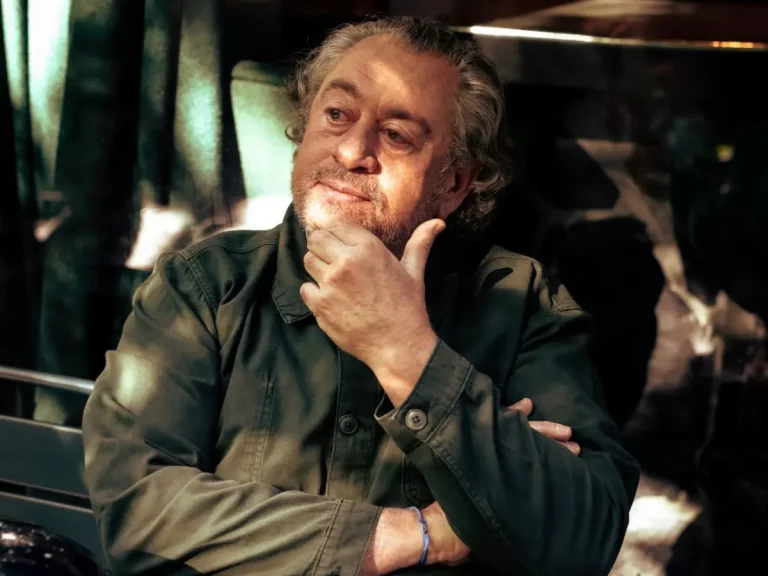
There is a reassuring, almost consoling idea that runs through contemporary fine dining: control. Control of the product, the menu, the narrative, the experience. Bruno Verjus, by contrast, deliberately calls that control into question. Not out of an anarchic impulse, but out of trust. Trust in time, in matter, in living beings. And, above all, in the belief that cooking does not mean dominating, but welcoming.
“Every morning, when the producers’ parcels arrive, it’s like Christmas,” he says. “It’s a surprise: we discover what’s inside, and we’re caught between the joy of discovery and the desire to understand what to do with these beautiful things.” This is not a poetic metaphor; it is a working method. At Table, his Paris restaurant, there is no fixed menu. There couldn’t be, because the cuisine is born from what arrives, not from what has been decided in advance.
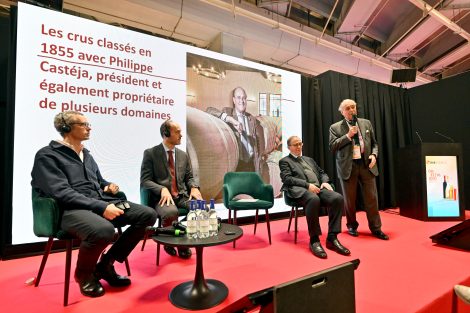
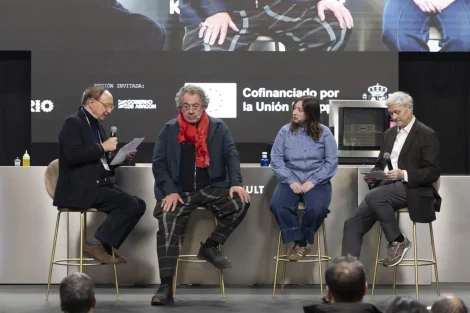
This is the approach Verjus describes while in conversation on stage during a public interview at Madrid Fusión, one of the world’s most important gastronomic congresses. Here the French chef, founder of Table Bruno Verjus, holder of two Michelin stars, does not present a manifesto, but a daily practice.
“Who knows a product better than the producer?” he asks. “They’re the ones who can tell me: today I have this, this and this, and it’s extraordinary.”
No pressure on producers
Everything else follows from this logic. Verjus does not order quantities, impose rhythms, or create pressure. “When you run a restaurant, you can unknowingly generate enormous pressure on producers, asking for things they simply aren’t able to give you.” So he reversed the relationship: “I told them: send me what you have, when you have it, as long as it’s exceptional.” Many no longer even need to give notice: “Every week a parcel arrives, and every week it’s a discovery.”
The result is a tasting menu that changes daily, because the starting point changes every day. “Receiving these products enormously stimulates my creativity,” he explains. “It’s tied to the intimacy of the landscape. Not always real landscapes: often they’re dreamlike, evoked. But they are images I try to share with those who come to eat at my place.”
This is not a ‘zero-kilometre’ cuisine driven by ideology, nor an obsessive chase after the local. “I don’t believe in dogma,” he says. “It’s like in love: you don’t keep count.” His suppliers are many, scattered, chosen for quality and sensitivity. “There is no exclusion. Cooking is a way of loving everyone at the same time.”
Cooking in the moment
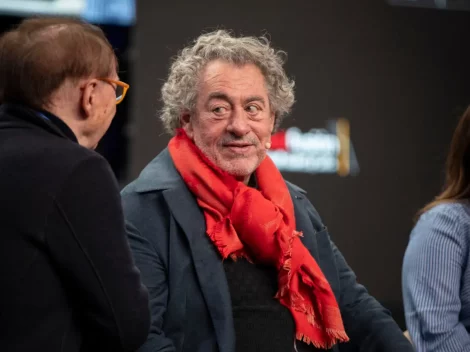
This freedom also translates into cuisine à la minute, another central theme in his narrative. But Verjus rejects the idea that it is a trend or a provocation. “This cooking of the moment is nothing new. It simply reconnects with the great tradition of French bourgeois cuisine.” He cites Fernand Point, Alain Chapel, Paul Bocuse and their way of working. “Everything was done to order. Apart from stocks and bouillons, everything else was created in the moment.” For him it is a matter of energy: “When you eat a product cooked like this, you come into contact with its intact energy. And that’s something that stays in the memory.”
Memory, for Verjus, is not just about taste. It is layering. “There must be at least three levels in a dish,” he explains. “The first is the approach: surprise, discovery. The second is flavour, the understanding of tastes. The third is feelings.” And that’s where something chemical happens: “It’s what imprints itself in the hippocampus. Perhaps twenty years later you taste something and suddenly you’re back in a place, with a person, in a specific season. Everything returns through the memory of taste.”
Too many words
This is also why Verjus rejects the idea of explaining to guests how to eat a dish. “I hate it,” he says bluntly. “When they tell you, ‘put the spoon there for maximum pleasure,’ there’s something slightly pornographic about it that disturbs me.” For him, responsibility lies upstream: “If we’ve done our job properly, the dish should be sufficiently legible on its own.”
In this vision, kitchen and dining room are not separate compartments. “A restaurant’s memory isn’t only about the dishes,” he says, “but also about the work in the dining room and in the cellar.” At Table, liquids matter as much as solids: wine, tea and sake become narrative tools. “Everything that contributes to creating emotion and ensuring that moment is remembered.”
Verjus looks at the present with clarity, without excess. He sees great vitality in contemporary cuisine, but also a world shot through with tension. Precisely for this reason, he assigns food a profound responsibility: “Feeding people is one of the most powerful ways of reconciling them.” Travelling through flavours, he says, means opening oneself up. And understanding that, in the end, “we all belong to the same small species.”
His final piece of advice, addressed to cooks, is simple and disarming: “Do things with conviction. Don’t abandon what you believe in. And work.” Then he pauses for a moment, almost surprised by his own journey: “Sometimes I sit at this table and think: it’s incredible. The work we’ve done is vertiginous.” Today there are eighteen of them, a team, a family. “All in the service of the guests. It’s a form of happiness.”
And perhaps that is the point: in a restaurant where the menu changes every day, what remains is the feeling of having been part of something alive. Not programmed. Not replicable. And precisely for that reason, memorable.
 Equalitas, exports and breaking the rules – why Casale del Giglio works
 'You have to let British people fall in love with Italy'
 Why ABFV Italy chose a quarry for its new Bolgheri winery
 Casa Vinicola Coppi pays tribute to its founder with forgotten grape variety
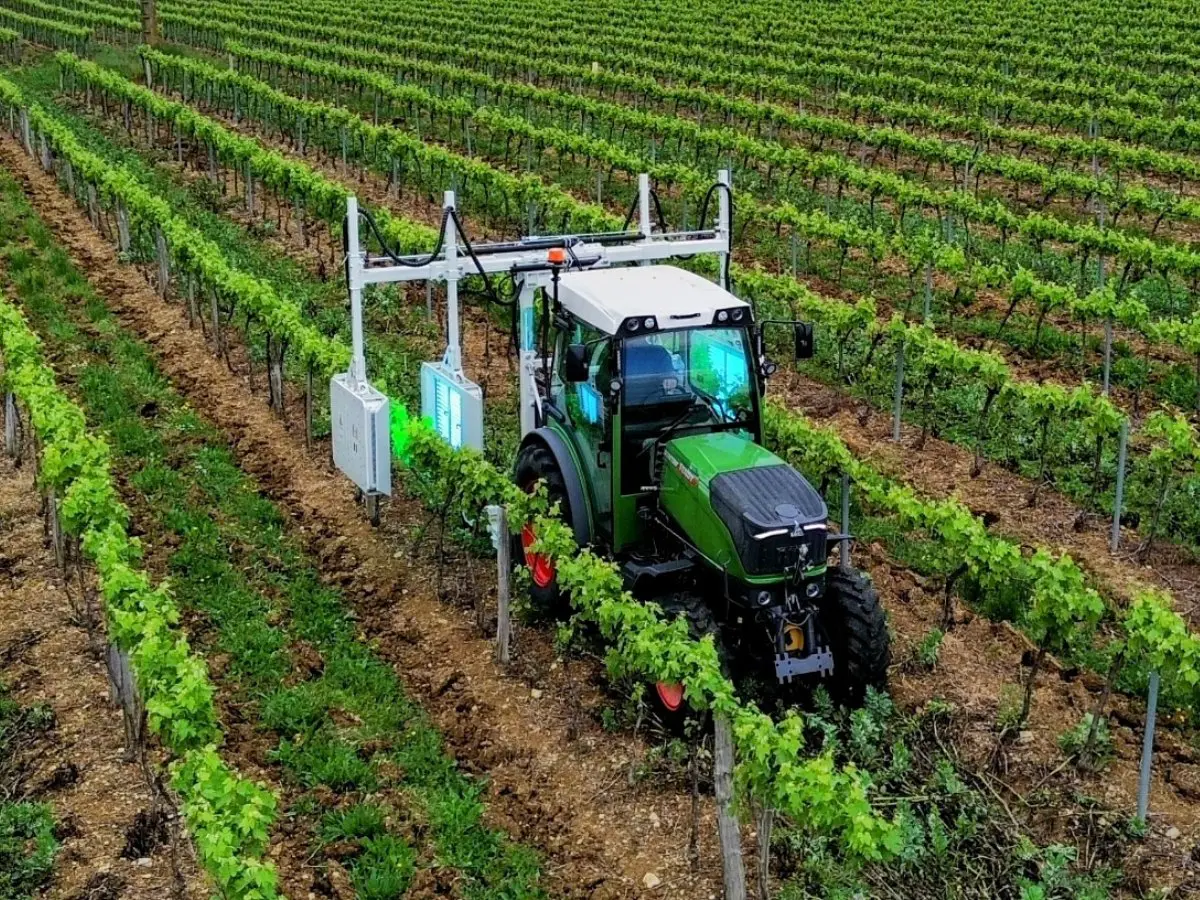 How ultraviolet rays can improve wine