
“I would say that from our experience, and we work with a very wide range of trade groups as well as producers, in 2025 we saw some caution. There was a little bit of hesitation to push the button on new programming, but at the end of 2025 and early 2026, we’re seeing a resolve to continue to market in the US. The US is still the number one market, and companies and trade organisations need to promote here," says Colangelo.
Founded in 2006, the Colangelo & Partners agency now has addresses in New York, San Francisco and Miami, and an enviable roster of clients from across the world of wine, spirits and food. However, it is Italian wine which is at the heart of the business, and this focus gives Colangelo a keen sense of the market.
The last year, since the beginning of President Trump's second term in the White House, has proven to be a period of considerable nervousness for wine producers within the European Union, largely due to the threat of massive tariffs on exports to the US market. In spite of this, Colangelo says that the US market is still a desirable one for producers and consorzi alike, as evidenced by a continued investment in PR and marketing efforts across the Atlantic.
"I can tell you in hard numbers that our business year-on-year in January was even, which we take to be a good thing, and in February we expect to be a little bit ahead of last year, so there are very positive signs for the start of 2026," says Colangelo. "We work with everywhere from Alto Adige to Sicily, so I think our experience is pretty indicative of where the market is heading."
Small fish in a big pond
The fact that a region such as Alto Adige, which has a wine-growing area roughly the size of that of Saint-Émilion in Bordeaux, is trying to grow its presence in a market as huge, and competitive, as the US is highly revealing. Colangelo suggests that the case of Alto Adige and other smaller Italian regions is partly because the US is a global trendsetter when it comes to wine culture.

Vineyards near Bolzano, Alto Adige.
“It’s not as much about huge spending as it is about consistency and co-ordination between the consorzi and the producers – the latter have to be present and need to engage their importers. When all that happens, even a small-sized denomination can make an outsized impact relative to the number of bottles sold. The US becomes more-and-more important as barriers break down between countries and media, such as Wine Enthusiast, Wine Spectator and Wine Advocate. Those articles and those scores travel, so it’s imperative for even small denominations to be present in the US market.”
Even some of the giants of Italian wine are disproportionately lively in this market compared to their European neighbours.
"The trade groups from Italy, whether Prosecco DOC, Sicilia DOC or Chianti Classico, are by far and away the most active and engaged in the US market amongst international wine marketing bodies, in terms of consistent presence, focus, and to some degree spending," he notes. "People aspire to the Italian lifestyle, and Italy markets that very well."
Travel broadens the palate
Another crucial factor in deepening the American infatuation with the Old Country has been tourism. Although the Dollar's strength compared to that of the Euro has waned in the last year, that has done little to put visitors off. According to data from the Italian Ministry of Tourism, in the first eight months of 2025 approximately 1.4 million Americans visited Italy, a year-on-year increase of 2.2%.
“The driver for Italy is the experience in Italy, of the food and wine. Americans still favour Italy over everywhere else when it comes to food and wine, and to some degree culture. That helps drive familiarity with Italian wines and therefore sales, perhaps to a greater degree than technical wine training courses do. Americans want to embrace an Italian lifestyle. Think of Sicily and The White Lotus. Sicily has a cache about travel, history and food. Americans’ eyes have been opened.”
Indeed, as anyone who braved the crowds of Taormina in the aftermath of the second series of the hit HBO series can attest, Sicily is very much on the radar of American tourists. This coupled with Sicilian wine marketing initiatives goes some way to explaining why the Mediterranean's largest island could be a big success in the US.

Taormina, setting of the second series of The White Lotus.
"From 2023 to 2025," Colangelo shares, "the number of US importers carrying Sicilia DOC wines increased by 49%, and if an importer takes a wine, they’ll sell it. We did some research and found that Sicily is the region whose wine sales are most likely to grow compared to its competitive set [other regions in Southern Italy]."
Positive trajectory
There are some similarly positive numbers for certain regions further north.
"Prosecco DOC sales in 2025 from January to September, we don’t have the fourth quarter yet, were up 8%, and the US is the leading market for Prosecco exports at 24%, which is really positive."
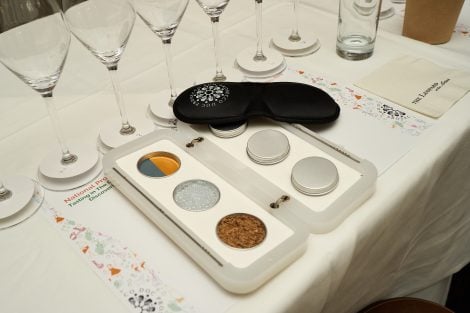
A Prosecco DOC tasting.
There is also good news coming from Tuscany, long the doyenne of American drinkers of Italian wine.
"The US is still the number one market for Chianti Classico, and from January to September 2025, Chianti Classico saw a year-on-year increase in sales in the US, despite tariffs and reduced consumption," says Colangelo.
Of course, these success stories cannot hide the fact that tariffs have had a detrimental effect on Italian wine's place in the US market, and by all estimates, will continue to do so while these measures are in place. The upside is that it could be worse.
"The numbers for Italy overall are still down a bit, but relative to other imported wines, Italy is still ahead of the market, and one of the reasons is that the Italians continue to invest."
Unsurprisingly, given his communications expertise, Colangelo's message to Italy's wine producers and trade bodies is clear and concise: "Stick to it. Especially when times are tough and other denominations and producers are reducing activity and investment, that’s the best time to pick up market share."
Drinks as diplomacy
While Trump is teetotal and therefore unlikely to partake in a Champagne (or Franciacorta) toast, perhaps the convivial aspect of wine might serve a diplomatic role.
Colangelo was one of the brains behind Come Over October, a campaign which aims to encourage wine lovers to share a bottle with their friends during the month of October. He notes that raising a glass can help to reach across the aisle, or even an international border.
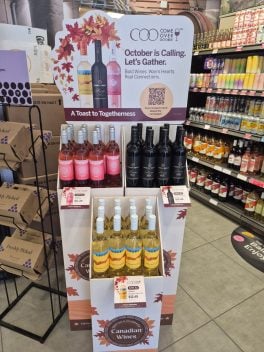
Come Over October's Canadian campaign. Image credit: Arterra Wines.
“The whole premise was that wine brings people together, and in 2025 we implemented a campaign in Canada of all places, despite all the acrimony with American wines and spirits being removed from Canadian store shelves. We bridged that divide with wine."
 Why the Italian wine industry should 'stick to it' in the US market
 Langhe Nebbiolo DOC in bag-in-box: the rule change dividing producers
 'Wine knowledge in Nigeria is evolving'
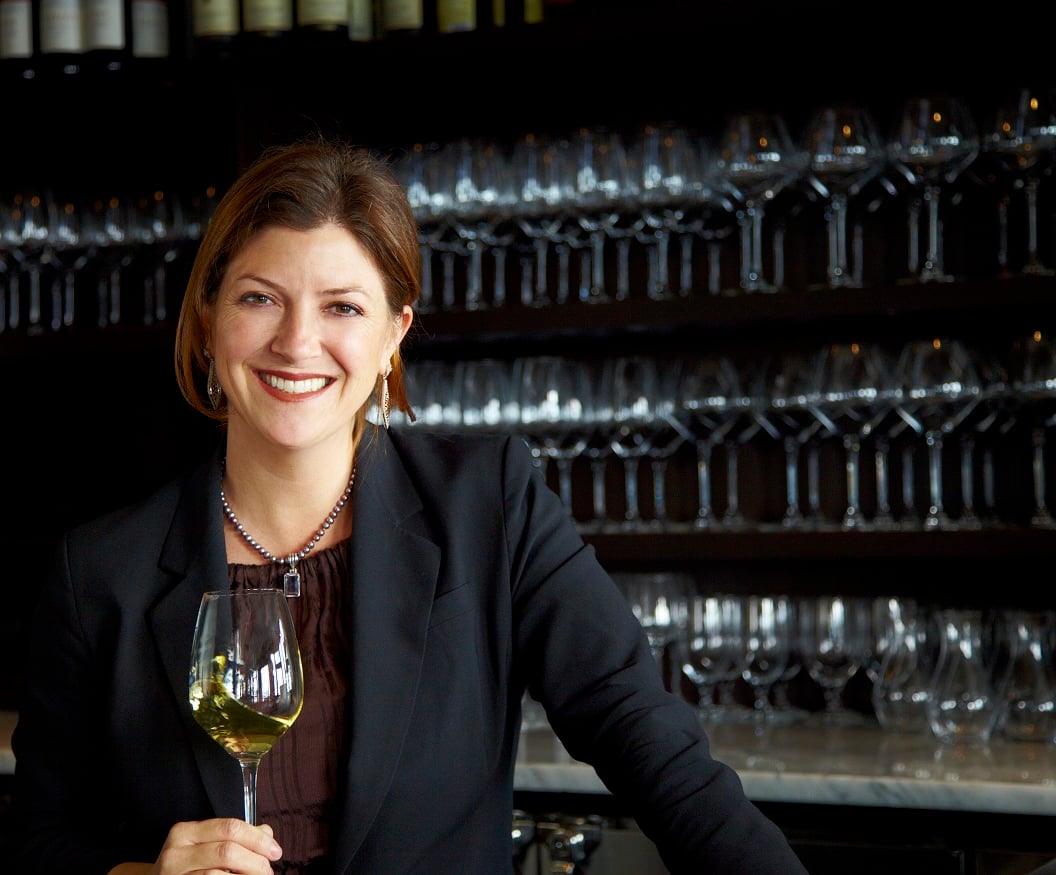 'It's a great time for Italian wine in the US'
 What to expect from Wine Paris 2026