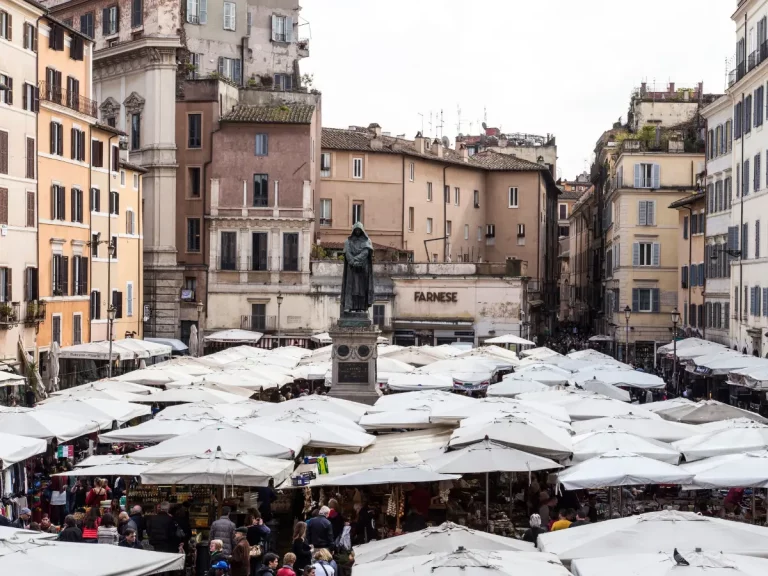
Campo de’ Fiori Market. An important, almost solemn name, evoking a history that stretches back centuries, an idea of Rome that is popular, commercial, alive — shaped by everyday exchanges rather than stage sets. It is the square of Giordano Bruno, where, fortunately, thinkers are no longer burned at the stake; yet something here continues to be sacrificed. After a long process of touristification, Campo de’ Fiori Market has lost its soul. Walking among the stalls, one often has the impression of entering not a market, but a representation of a market: a “simplified,” tamed, repetitive version, designed more to be seen than to be lived.
Campo de’ Fiori has lost its soul
The prevailing feeling is not the creative disorder of true markets, but a curious regularity: the same brightly colored little bottles, the same fluorescent liquids, the same vinegars, the same neatly arranged packets of legumes — all identical, all replicated as if someone had decided that Italy, in order to be recognisable, must fit within a precise palette. Lemon yellow, pistachio green, chili red. The market as a Pantone chart of 'Italianness'.
What is being sold is no longer just a product, but the idea of the product. Not oil, but “typical oil.” Not legumes, but “traditional legumes.” Not food, but the reassuring narrative that accompanies it. The tourist, more than buying, confirms: confirms that they have been to Italy, that they have seen the “real thing,” that they have taken part in the ritual. Campo de’ Fiori seems to have become a compulsory stop in this visual pilgrimage, a station in the standardised experience.
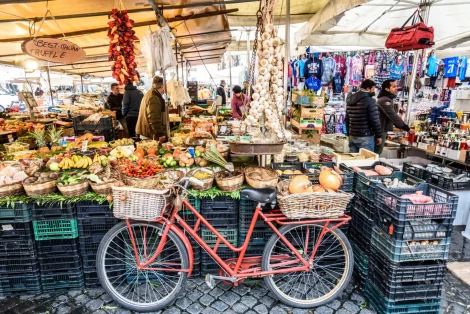
And the curious thing is that almost no one speaks about this transformation. It is celebrated, praised, photographed, commented on with automatic enthusiasm. “How beautiful,” “how wonderful,” “what colours.” Yet no one seems to ask whether a market that so often offers the same things is still a market — or rather an open-air themed showcase. No one seems to question what is lost when variety gives way to repetition, and function to representation. Tourism devours everything.
The historic stalls that endure
Fortunately, some historic fruit and vegetable stalls still remain. They are the ones that remind us what a market truly is: an imperfect place, seasonal (not always, unfortunately), tied to agricultural rhythms and to people. Roman markets are unique precisely for this reason: each neighbourhood has its own character, its own voices, its own specialties, its own contradictions. They are popular, alive, unpolished. Campo de’ Fiori, on the other hand, has for some time now been moving toward a smoother, more reassuring version of itself — recognisable anywhere. It may not be a fault. Perhaps it is a choice. But calling it what it is — a gradual process of touristification and homogenisation — should not be taboo.
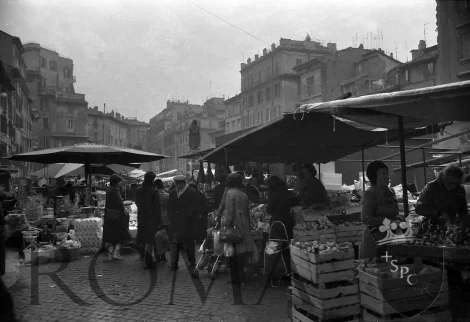
Piazza Campo De Fiori nel 1977 – historic photo, Comune di Roma
It is not romanticism to close one’s eyes to reality; it is romanticism to pretend that nothing is happening. And something is happening: an iconic market is slowly turning into a showcase. It is up to us to decide whether that is perfectly fine, or whether it is still worth defending the idea of a market as a living place, not merely a backdrop. Because Rome can afford many things. But becoming a postcard of itself may be the saddest of all.
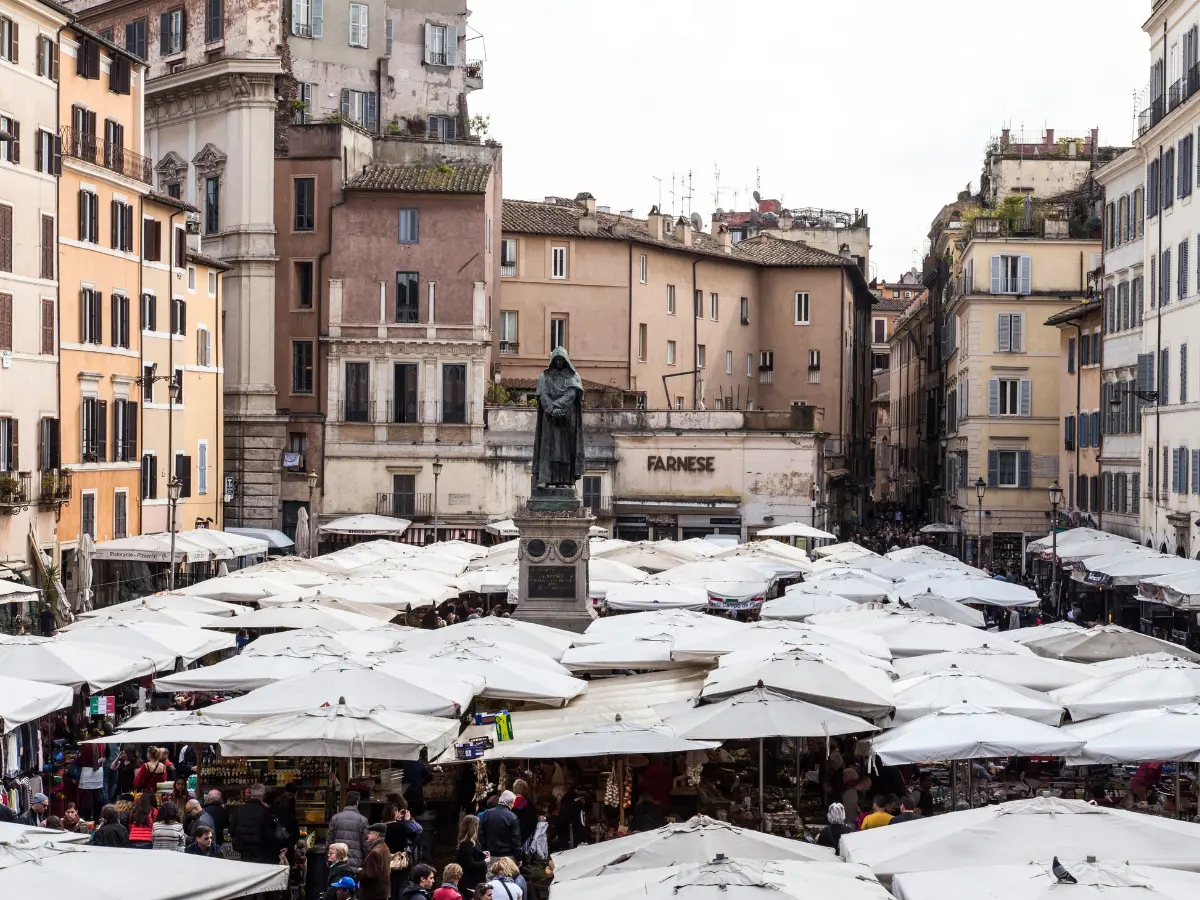 'Campo de’ Fiori is no longer a market': The transformation that no one talks about
 'Excellent products will remain excellent' – but does Old World wine have to adapt to survive?
 Why 'the rules are still being written' for non-alcoholic drinks
 'Why are we doing the same things again and again if they are not working?'
 'You cannot imagine how magnetic Etna is!'