"What has remained unchanged since the foundation of the winery is our deep bond with the territory, the central role of family management and an uncompromising commitment to quality," says Clemente Zecca, part of the latest generation to run historical Salento wine estate Conti Zecca.
The Zecca family's roots in Leverano, close to the tip of the heel of Italy, go back five centuries. It was in 1935 that Alcibiade Zecca would found a cutting edge winery where, 91 years on, his descendants still work.
"What has changed are of course the techniques we use: technological innovations now support us in the optimal management of both vineyard and cellar operations. At the same time, the world, markets and consumer tastes have evolved. While it is important to adapt to these changes, it is equally essential to have the courage to remain true to our philosophy," he continues. "It is precisely in this balance between evolution and continuity that the identity of the winery lies, an identity capable of renewing itself without ever losing its soul."
A family matter
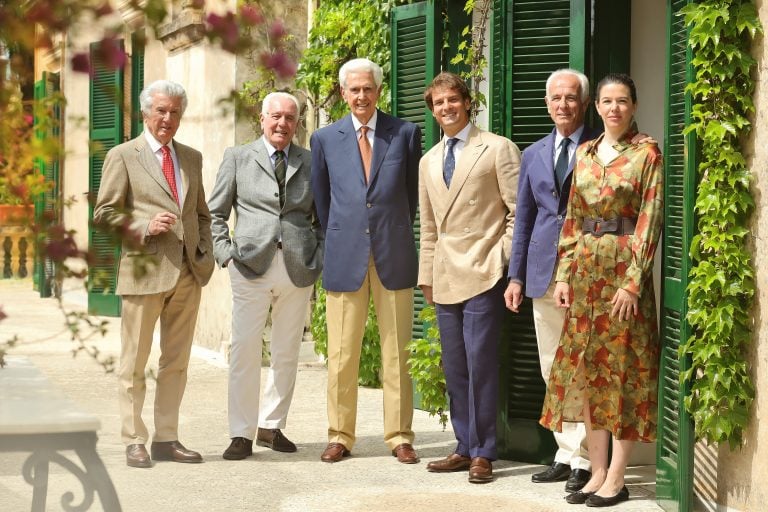
Clemente Zecca joined the family business in 2017. His father, Mario, began managing the winery alongside his three brothers in the 1990s after taking the reins from their father Giuseppe, who in turn took charge from his father (and Clemente's great-grandfather) Alcibiade.
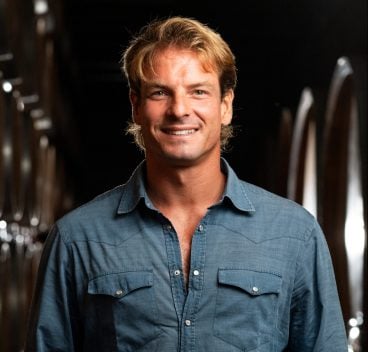
Clemente Zecca
"Continuity through family ownership ensures stylistic consistency and long-term stability. Family management enables the direct transmission of values, expertise and corporate culture. This results in an authentic and recognisable identity, positively perceived by both the market and consumers," says Zecca.
"The direct bond between family, vineyards and winery leads to constant attention to quality at every stage of the production process. The territory is not merely an economic resource but a heritage to be preserved, generating positive effects on agronomic practices, environmental sustainability and corporate reputation," he explains. "Family-run businesses often benefit from lean decision-making structures, allowing them to adapt more quickly to changes in the market. In a context where storytelling is increasingly central, a family-owned winery offers an authentic narrative, rooted in real people, true stories and a deep connection to its territory."
"All of this is directly reflected in the relationship with the final consumer. Knowing that the company is personally and consistently managed by the same people conveys a strong sense of reliability and coherence, with the assurance of a product crafted with care and responsibility, where quality and style are not entrusted to impersonal structures, but to people who stand behind what they create," he argues.
Local heroes
Part of the Zecca family's custodianship of the territory of Leverano comes in the form of its decision to champion Pugliese grape varieties such as Negroamaro and Primitivo.
"Preserving local grape varieties means safeguarding a cultural and agricultural heritage that tells the story of a community and its winemaking traditions. In this way, the winery becomes a custodian of shared knowledge, strengthening its bond with the land and contributing to its overall valorisation, including from a wine tourism perspective," says Zecca. "Because they are naturally adapted to their original climate and soils, local grape varieties often require fewer agronomic interventions. This supports more sustainable farming practices, greater resilience to climate change and more efficient management of natural resources."
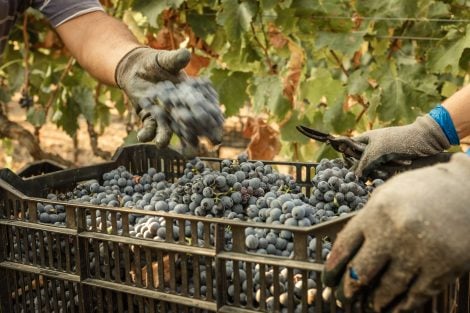
Conti Zecca's 2023 Rifugio Primitivo garnered the distinction of a Tre Bicchieri rating in the recently-launched Vini d'Italia 2026, ranking it among the very best wines in Puglia.
Indeed, the estate's use of the local varieties can be seen as an embodiment of its overall philosophy of balancing tradition with development.
"Enhancing indigenous grape varieties is not at odds with innovation," he argues. "On the contrary, it offers broad opportunities for research and experimentation, both in the vineyard and in the cellar, making it possible to reinterpret tradition through a contemporary lens and to develop wines that resonate with modern tastes."
 Equalitas, exports and breaking the rules – why Casale del Giglio works
 'You have to let British people fall in love with Italy'
 Why ABFV Italy chose a quarry for its new Bolgheri winery
 Casa Vinicola Coppi pays tribute to its founder with forgotten grape variety
 How ultraviolet rays can improve wine